


Welcome to VFB. Maryland football is a well-known and respected college football program with a rich history of competition, outstanding players, and unforgettable moments. Representing the University of Maryland, the Terrapins have built a strong tradition while continuing to compete against some of the best teams in the country.
As a member of the highly competitive Big Ten Conference, the Maryland Terrapins football program continues to develop talented athletes and prepare many players for opportunities at the professional level.
Whether you’re discovering the team for the first time or have supported the Terrapins for years, this guide covers everything you need to know about Maryland football. Explore the program’s history, schedule, roster, coaching staff, home stadium, recruiting efforts, and the exciting future ahead for the Terrapins.
What Is Maryland Football?
Maryland football is the official college football program representing the University of Maryland. The team competes in the NCAA Division I Football Bowl Subdivision (FBS), the highest level of college football in the United States, and is widely known as the Maryland Terrapins.
Over the years, the program has established a proud tradition through competitive performances, talented players, and a strong focus on athlete development. Supported by a dedicated fan base and a rich football history, Maryland continues to represent the university with pride while facing some of the nation’s top college football programs each season.
The Terrapins aim to succeed in conference competition, earn opportunities to play in bowl games, and help develop talented athletes for potential careers in professional football.
Overview of the Program
The Maryland football program has a proud history spanning more than a century, making it one of the long-established programs in college football. Throughout the years, the Terrapins have achieved conference success, earned memorable victories, and produced talented players who later continued their careers in the NFL. These accomplishments have helped build Maryland’s reputation and tradition within college football.
Today, the University of Maryland continues working to strengthen its football program through experienced coaching, modern training facilities, advanced sports technology, and comprehensive athlete development programs. These resources help players develop their skills, maintain their physical preparation, and perform at a high level throughout the season.
Conference and NCAA Division
Maryland football competes in the Big Ten Conference, one of the strongest and most competitive conferences in NCAA Division I football. As a member of the Big Ten, the Terrapins regularly face nationally recognized programs, giving the team valuable experience against high-level competition.
Maryland also competes in the NCAA Division I Football Bowl Subdivision (FBS), the highest level of college football in the United States. Each season, the program competes for conference success, postseason opportunities, and greater national recognition.
The team participates in:
- NCAA Division I Football Bowl Subdivision (FBS): The highest level of college football, featuring many of the nation’s top university programs.
- Big Ten Conference competition: Maryland plays important conference matchups against fellow Big Ten teams, with these games having a significant impact on the conference standings.
- Regular-season conference and non-conference games: The Terrapins face both Big Ten opponents and teams from other conferences throughout the regular season.
- Bowl games when eligible: When Maryland meets the required eligibility standards, the team may earn an invitation to a postseason bowl game, providing players with another opportunity to compete and conclude the season successfully.
Maryland Football Schedule
The Maryland football schedule features a mix of conference and non-conference games, creating a challenging and competitive season for the Terrapins. Each year, the team takes on a range of opponents that test its preparation, consistency, and ability to perform under pressure.
The outcome of these games can have a major impact on Maryland’s overall season record, conference standing, and opportunities for postseason bowl competition. Fans closely follow the Maryland football schedule throughout the year to keep track of game dates, opponents, key matchups, and important moments as the season progresses.
How the Schedule Is Organized
The Maryland football schedule is structured to provide a balanced mix of competition while preparing the Terrapins for the challenges of Big Ten play. The season generally begins with non-conference games before moving into a demanding schedule of conference matchups. This structure gives the coaching staff opportunities to evaluate players, develop team chemistry, and make adjustments before the most important games of the season.
A typical Maryland football season includes:
- Non-conference games: These matchups against teams from outside the Big Ten help the Terrapins build momentum and prepare for tougher conference competition.
- Big Ten Conference games: These games have a direct impact on Maryland’s conference position and often feature some of the team’s most challenging opponents.
- Home and away matchups: Maryland plays games at SECU Stadium as well as on the road, giving players experience competing in different environments.
- Rivalry contests: Rivalry games often attract additional attention because of the history and competitive nature between the teams.
- Potential postseason bowl games: If Maryland meets the required postseason eligibility standards, the Terrapins may receive an invitation to compete in a bowl game after the regular season.
Key Rivalry and Conference Games
Conference games are a crucial part of the Maryland football season because their results directly influence the team’s position in the Big Ten standings. Facing strong conference opponents provides the Terrapins with challenging opportunities to compete at a high level, while each result can affect the team’s overall record and postseason prospects. These matchups also generate considerable interest among fans, media outlets, and college football analysts.
Following the complete Maryland football schedule allows supporters to stay informed about kickoff times, home and away games, rivalry matchups, and potential postseason opportunities. Keeping up with the schedule throughout the season makes it easier for fans to follow Maryland’s progress from the opening game through the final matchup.
Read Also: Football Cleats
Maryland Football Roster
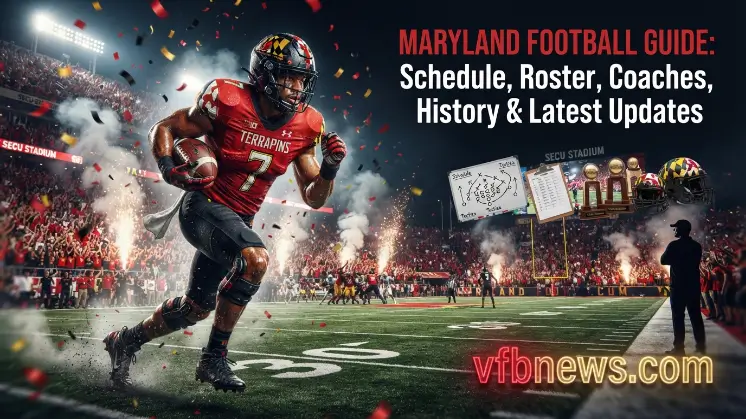
The Maryland football roster features a talented group of student-athletes across offense, defense, and special teams. Each season, the Terrapins bring together returning players, experienced starters, and new recruits who compete for important roles and playing time.
Every position has a specific responsibility, and strong teamwork is essential to the team’s success on the field. Throughout the season, the coaching staff evaluates player performance, development, and overall team needs to build the strongest possible lineup for each matchup.
Offensive Players
The offensive unit plays a key role in moving the ball down the field, scoring points, and controlling the flow of the game. Each position has a specific responsibility, and effective communication and teamwork are essential for executing plays successfully. A well-balanced offense with talented players can create scoring opportunities and put pressure on opposing defenses.
The offense includes several important positions:
- Quarterback: Directs the offense, makes quick decisions, throws passes, and communicates plays to teammates.
- Running back: Carries the ball on rushing plays while also contributing to pass protection and the passing game when needed.
- Wide receiver: Runs routes, catches passes from the quarterback, and uses speed and technique to gain yards.
- Tight end: Contributes to both the passing and running game by blocking defenders and catching passes.
- Offensive line: Protects the quarterback and creates running lanes for ball carriers, making the offensive line an essential part of the team’s success.
Defensive Players
The defensive unit plays a vital role in stopping the opposing offense, preventing touchdowns, creating turnovers, and limiting big plays. A strong defense depends on teamwork, discipline, communication, and quick reactions to disrupt the opponent’s game plan. Every defensive position has an important role in protecting the team and creating opportunities to regain possession.
Key defensive positions include:
- Defensive line: Pressures the quarterback, disrupts offensive plays, and works to stop running plays near the line of scrimmage.
- Linebackers: Defend against both the run and pass while making tackles and supporting the defensive line.
- Cornerbacks: Cover opposing wide receivers and defend against passing plays.
- Safeties: Provide deep coverage, help defend against long passes, and support the defense by making tackles when needed.
Players to Watch
Each season, several players emerge as important contributors through their talent, dedication, and consistent performances on the field. These athletes may earn starting positions, lead the team in key statistics, and make important plays during crucial moments.
The performance of these players can have a significant impact on the team’s overall success throughout the season. Strong individual performances may also attract attention from conference officials, college football analysts, and NFL scouts evaluating potential professional talent.
I can also rewrite the next section about the Maryland football coaching staff in the same SEO-friendly style.
Coaching Staff
A successful Maryland football program relies on a dedicated and experienced coaching staff to guide players and help the team reach its goals. Coaches work throughout the year to develop players’ skills, create effective game strategies, organize training programs, and establish a strong team culture.
Their leadership is essential to preparing the Terrapins for each opponent and helping players perform at their best. Beyond game preparation, the coaching staff also emphasizes discipline, teamwork, accountability, and continuous development, all of which contribute to the program’s long-term success.
Head Coach
The head coach serves as the leader of the Maryland football program and oversees the team’s overall direction and performance. From organizing daily practices and preparing game plans to making important decisions on game day, the head coach works to ensure that players are ready to face every challenge.
The position also involves recruiting talented athletes, managing the coaching staff, developing team strategies, and maintaining a strong program culture. Effective leadership can help create a competitive and disciplined team while keeping players focused on shared goals.
A successful head coach also plays an important role in player development by building confidence, encouraging teamwork, and creating a positive environment. Strong leadership can help the Terrapins continue improving each season while establishing a foundation for long-term success.
Coaching Philosophy
The Maryland football coaching staff follows a development-focused philosophy designed to help student-athletes grow both on and off the field. In addition to improving football skills, coaches emphasize discipline, teamwork, leadership, accountability, and personal responsibility. This approach helps players become well-rounded athletes while preparing them to handle challenges throughout their football careers and beyond.
The coaching staff focuses on several key areas:
- Player development: Helping athletes improve their technical skills, football knowledge, decision-making, and overall performance.
- Team discipline: Encouraging responsibility, commitment, consistency, and strong work habits during practices and games.
- Smart game planning: Developing effective strategies based on the team’s strengths, weaknesses, and upcoming opponents.
- Physical conditioning: Building strength, speed, endurance, and overall fitness to help players perform consistently throughout the season.
- Strong leadership: Developing confident athletes who support their teammates, communicate effectively, and lead by example on and off the field.
Maryland Football History
The history of Maryland football spans more than a century and is filled with competition, growth, and memorable achievements. Since its early beginnings, the Terrapins have established themselves as a respected college football program by developing talented players, earning important victories, and building a dedicated fan base.
From the program’s early years to the modern era, Maryland football has continued to evolve with the changing landscape of college athletics. While adapting to new challenges and opportunities, the Terrapins have maintained their football tradition and continued to pursue success both on and off the field.
Program Origins
The University of Maryland established its football program more than a century ago, creating the foundation for what would become a respected program in NCAA college football. During its early years, the team gradually developed through improved coaching, stronger recruiting efforts, and growing support from the university. As college football continued to gain popularity, Maryland expanded its facilities and resources to provide athletes with better opportunities to train and compete.
Over the decades, generations of student-athletes have played an important role in shaping the identity of Maryland football. Their dedication, hard work, and memorable performances have helped create a proud football tradition that continues to motivate current players and attract future recruits. The program’s long history remains an important part of the University of Maryland’s athletic tradition.
Major Achievements
Throughout its history, Maryland football has achieved numerous milestones that have contributed to the program’s reputation in college football. These accomplishments reflect the Terrapins’ competitive spirit, consistent effort, and ability to develop talented athletes. Success in conference competition, bowl games, national rankings, and player development has helped Maryland earn recognition among fans and college football programs.
Some of the program’s notable accomplishments include:
- Conference championships: Maryland has captured conference titles, demonstrating its ability to compete successfully against strong opponents.
- Bowl game appearances: The Terrapins have earned opportunities to compete in postseason bowl games following successful regular seasons.
- National recognition: Strong performances in various seasons have resulted in Maryland receiving attention in national college football rankings.
- NFL player development: Numerous Maryland players have gone on to pursue professional football careers, highlighting the program’s commitment to developing talent.
- Rich football traditions: Maryland has established traditions that bring together players, students, alumni, and fans while strengthening the program’s identity from one generation to the next.
Notable NFL Players
Many former Maryland football players have continued their careers in the National Football League (NFL), demonstrating the program’s ability to develop athletes for the demands of professional football. Over the years, former Terrapins have represented various NFL teams and established themselves as talented competitors at the professional level.
The success of these players highlights the importance of coaching, training, and player development within the Maryland program. Their professional achievements can also serve as motivation for current student-athletes, showing how dedication, hard work, and consistent performance at Maryland can create opportunities to compete at the highest level of football.
SECU Stadium
SECU Stadium serves as the home of Maryland football and is at the heart of the Terrapins’ home-game experience. Located on the University of Maryland campus, the stadium welcomes thousands of fans throughout the season who gather to support the team and enjoy college football.
Beyond providing a home-field advantage for Maryland, SECU Stadium offers facilities designed to support players, coaches, students, alumni, and visitors. The venue plays an important role in Maryland football traditions and provides an exciting setting for fans to experience game days throughout the season.
Stadium Features
SECU Stadium is designed to provide an enjoyable game-day environment while meeting the needs of both the Maryland football team and its supporters. Over the years, the University of Maryland has invested in stadium improvements to enhance facilities, comfort, accessibility, and the overall experience for fans. These upgrades help keep the venue a welcoming and modern setting for college football.
The stadium features:
- Large seating capacity: Provides space for thousands of fans to attend Maryland home games and support the Terrapins.
- Modern video displays: Large screens provide live game action, replays, scores, and other important updates during games.
- Fan amenities: Concessions, restrooms, seating areas, and other services make game-day visits more convenient.
- Player facilities: Dedicated areas support team preparation, training, and development throughout the season.
- Enhanced spectator experience: Ongoing improvements can help provide better visibility, accessibility, comfort, and convenience for fans attending games.
Game-Day Atmosphere
A Maryland football home game offers an exciting atmosphere that brings together students, alumni, families, and supporters from across the region. Before kickoff and throughout the game, fans create an energetic environment by cheering for the Terrapins and taking part in university traditions. This strong home support adds to the excitement and helps create a memorable experience for players and spectators.
The game-day atmosphere is further enhanced by the university’s marching band, spirit activities, and enthusiastic crowd participation. Together, these traditions create an enjoyable college football experience for visitors of all ages. Whether attending a game for the first time or returning each season, fans can look forward to an engaging and memorable day at SECU Stadium.
Recruiting and Future Outlook
Recruiting plays an important role in the long-term success of Maryland football. Throughout the year, the coaching staff evaluates talented high school athletes who demonstrate the skills, character, work ethic, and commitment needed to compete at the college level.
A strong recruiting strategy helps the Terrapins build a competitive roster, maintain depth at every position, and prepare for changes as experienced players graduate or move on. When combined with effective coaching and player development, successful recruiting gives Maryland the talent and depth needed to compete consistently in the Big Ten Conference.
Recent Recruiting Success
In recent years, Maryland football has continued to attract talented recruits from across the country. The coaching staff evaluates athletes based not only on their physical abilities and football skills but also on qualities such as leadership, discipline, work ethic, and academic commitment. Finding well-rounded student-athletes helps the program build a team capable of competing both on the field and in the classroom.
Effective recruiting also helps the Terrapins maintain depth at every position. While experienced players contribute leadership and game experience, younger athletes have opportunities to develop their skills and prepare for larger roles. This creates healthy competition within the roster and gives Maryland a strong foundation for continued improvement in future seasons.
Expectations for Upcoming Seasons
The future of Maryland football will depend on continued progress in recruiting, player development, coaching, and overall team performance. By attracting talented athletes and helping them reach their potential, the Terrapins can work toward competing more consistently against the strongest teams in the Big Ten Conference. Continued investment in coaching staff, facilities, training programs, and other resources can also support the program’s long-term goals.
Looking ahead, Maryland football aims to:
- Improve conference standings: Compete consistently throughout the season and work toward a stronger position in the Big Ten Conference.
- Compete for bowl games: Earn enough regular-season victories to qualify for postseason bowl opportunities.
- Develop future NFL players: Provide talented athletes with the coaching, training, and experience needed to pursue professional football careers.
- Strengthen recruiting classes: Attract skilled and dedicated student-athletes who can contribute to the team’s future success.
- Build long-term success: Establish a competitive and sustainable program capable of achieving success across multiple seasons.
Frequently Asked Questions
What conference does Maryland football play in?
Maryland football competes in the Big Ten Conference, one of the most competitive conferences in NCAA Division I football.
Who is the Maryland football head coach?
The head coach leads the football program by managing recruiting, player development, training, and overall team strategy.
Where does Maryland football play home games?
The team plays its home games at SECU Stadium, located on the University of Maryland campus.
Has Maryland won a national championship?
Maryland has enjoyed many successful seasons, conference championships, and bowl appearances throughout its history, making it one of the respected programs in college football.
Conclusion
Maryland football continues to build on its proud tradition while competing against some of the nation’s strongest college football programs. With a talented roster, dedicated coaching staff, passionate fan base, and ongoing recruiting efforts, the Terrapins remain a team worth following throughout each season.
Whether you’re interested in the Maryland football schedule, roster, history, coaching staff, or future outlook, staying informed provides a better understanding of the program’s continued development. As the Terrapins move forward, fans can look forward to competitive games, emerging talent, and memorable moments both on and off the field.
