

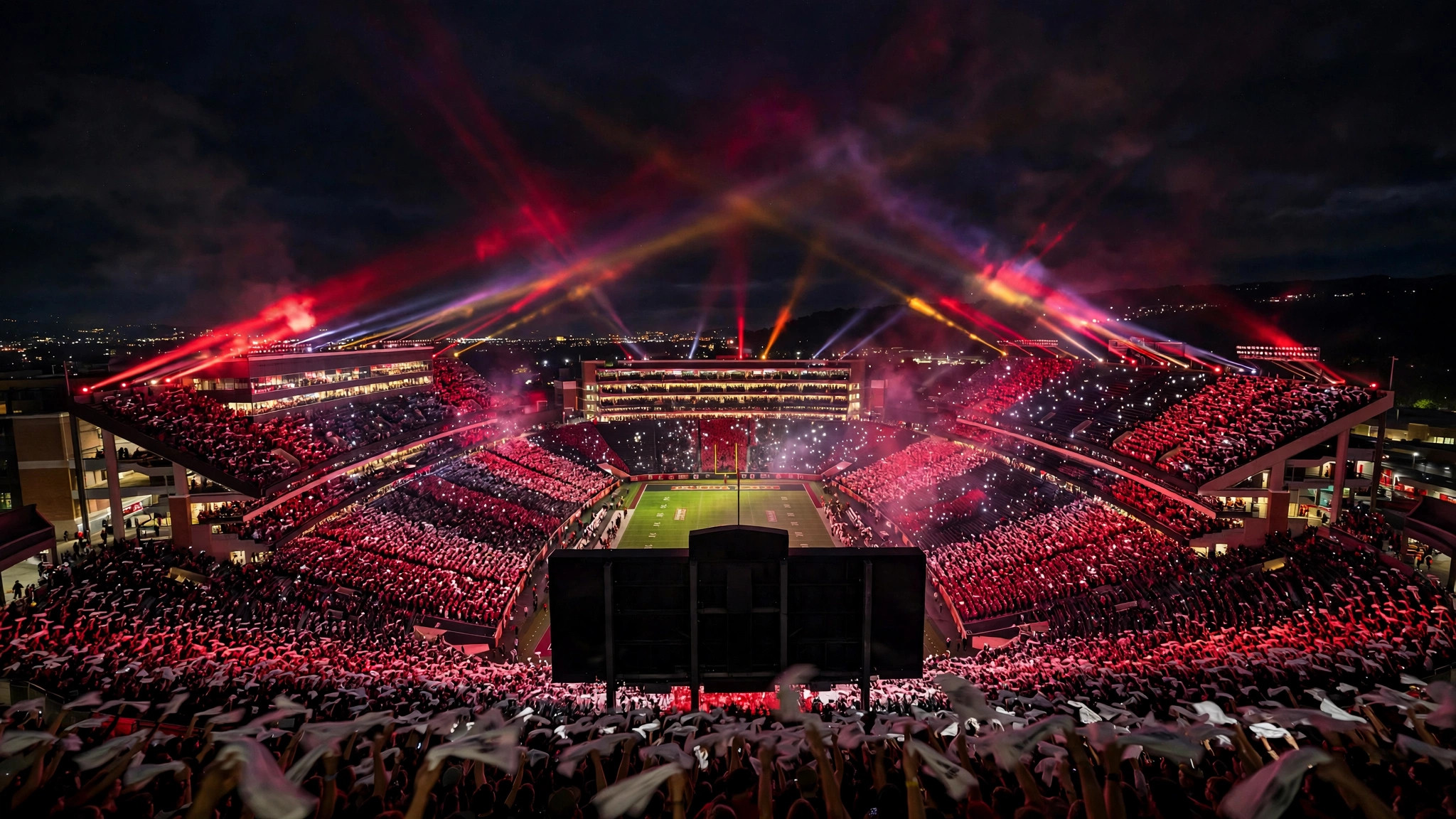
South Carolina football is a study in loyalty. Gamecocks fans fill Williams-Brice Stadium through winning seasons and lean ones, and when the team gives them a moment — a top-five upset, a bowl win, a field storming — the release is unforgettable. This guide covers the program’s schedule, roster, traditions and outlook.
The modern Gamecocks are led by head coach Shane Beamer, whose energy and recruiting have raised the program’s ceiling since his arrival in 2021. South Carolina has produced signature wins in his tenure, including a famous 2022 closing stretch that toppled Tennessee and Clemson in consecutive weeks, and the goal now is turning those peaks into a consistent SEC presence.
University of South Carolina Football
The University of South Carolina’s football program dates to the nineteenth century and has spent most of its life fighting for respect in a brutal neighborhood. The Gamecocks were ACC members until 1971, spent two decades as an independent, and joined the SEC in 1992, where the schedule has offered no shelter since.
Williams-Brice Stadium is the program’s home and its fortress. Holding more than 77,000 fans, it is one of the SEC’s most underrated environments, especially at night. The pregame entrance, with the theme from “2001: A Space Odyssey” building as the team storms the field, and the Sandstorm tradition — towels waving as the Darude track blasts — give South Carolina a game-day identity known across the sport.
The program’s history includes the 1969 ACC championship, George Rogers’ 1980 Heisman Trophy season, and the Steve Spurrier era from 2005 to 2015, which delivered the school’s best sustained run: an SEC East title in 2010 and three straight eleven-win seasons from 2011 to 2013. Jadeveon Clowney’s years headlined that peak and made Columbia a national dateline.
U of S Carolina Football
By any name, U of S Carolina football runs on a emotional calendar built around two dates: Georgia early and Clemson late. The Clemson rivalry, the Palmetto Bowl, closes the regular season and decides the state’s bragging rights. Clemson has dominated the series historically, which makes every Gamecocks win in it a generational memory; the 2022 victory in Death Valley is still celebrated in Columbia.
The schedule’s structure follows the SEC pattern:
- Eight conference games in the league rotation, including the traditional Eastern powers
- Nonconference dates highlighted by the Clemson finale
- A home slate at Williams-Brice that the fan base treats as sacred ground
- Bowl ambitions that usually hinge on surviving the conference’s middle class
Comparing paths across the league helps frame South Carolina’s task. The LSU football schedule shows the calendar of a program the Gamecocks are chasing, and the margins between the league’s tiers are thinner than the reputations suggest.
Carolina USC Football
Carolina USC football — not to be confused with the Trojans of Southern California, a mix-up Gamecocks fans have corrected for decades — is defined by its roster-building challenge. South Carolina sits in a recruiting footprint squeezed by Clemson, Georgia and the North Carolina schools, so the program’s best eras have blended in-state finds, Georgia and Florida imports, and transfers who needed a stage.
Under Beamer, the approach has emphasized energy and evaluation: find explosive athletes, develop linemen patiently, and use the portal to fill the gaps the schedule exposes. The results have been streaky but promising, with the roster’s top end producing NFL talent at receiver, on the defensive line and in the secondary.
What swings a Gamecocks season:
- Quarterback play, the position that has decided South Carolina’s ceiling in its best years
- A defensive front capable of surviving SEC rushing attacks
- Home form; the Gamecocks’ bowl hopes usually live or die at Williams-Brice
- Health through November, when depth across the league is thinnest
Official schedules, rosters and tickets are maintained at South Carolina’s athletics website.
South Carolina Gamecocks Schedule and Roster
The roster conversation in Columbia always returns to the lines. South Carolina’s best teams, from the Spurrier peak to Beamer’s upset squads, won at the line of scrimmage often enough to let their skill talent decide games. When the Gamecocks are overmatched up front, the SEC schedule exposes it quickly.
Position groups that carry the season:
- The defensive line, forever the program’s calling card, from Clowney’s era to the current rotation
- Wide receiver, where South Carolina has produced a steady line of playmakers
- The secondary, tested by the league’s spread attacks
- Special teams, a Beamer family tradition; Shane’s father Frank built Virginia Tech’s identity on them, and the son treats the third phase with the same seriousness
That special teams emphasis is a genuine edge. Blocked kicks, return touchdowns and field-position wins have swung multiple Gamecocks upsets, and opponents know Columbia is a place where the kicking game can beat you.
South Carolina Football Traditions
Few programs reward their fans’ loyalty with atmosphere like South Carolina. The traditions stack up:
- Sandstorm, the stadium-wide towel wave that has become the program’s signature visual
- The 2001 entrance, college football’s most cinematic team arrival
- Cocky, the mascot who emerges from a magic box during the entrance
- The Gamecock Walk and a tailgating scene built around the fairgrounds beside the stadium
The fairgrounds setting gives South Carolina tailgating a distinctive flavor — part football Saturday, part state fair — and night games at Williams-Brice, with the light show and the crowd in full voice, belong on any SEC fan’s list. Our Auburn football schedule guide shows how a comparable SEC fan base builds its own Saturdays; the passion in Columbia measures up to any of them.
South Carolina Football History Highlights
The Gamecocks’ history is a story of near misses and beloved breakthroughs. George Rogers’ 1980 Heisman season remains the individual summit: the tailback ran through the SEC and took home the trophy that still anchors the program’s trophy case, with his statue standing outside the stadium.
The “Black Magic” season of 1984, under Joe Morrison, carried South Carolina to a top-two ranking in November before a late stumble cost a shot at something bigger; fans of a certain age still talk about that autumn like a family legend. The Lou Holtz era produced back-to-back Outback Bowl wins over Ohio State at the turn of the century, and Spurrier then delivered the program’s modern peak.
Those eras share a pattern: a charismatic coach, a defense with teeth, and a quarterback good enough to steal the biggest games. When South Carolina has had all three, it has beaten anyone in America. The program’s history is really the search to assemble that trio again.
Gamecocks Bowl History and Big Wins
South Carolina’s postseason history mirrors its regular-season story: decades of scarcity followed by a modern era in which bowls became an expectation. The Gamecocks did not win a bowl game until the 1994 season’s Carquest Bowl, a drought that older fans remember painfully. Since then, Columbia has celebrated Outback, Capital One, Liberty, Birmingham and Duke’s Mayo bowl wins, among others.
The big wins are the program’s currency:
- The 2010 upset of No. 1 Alabama, the signature victory of the Spurrier era
- The 2010 SEC East title, sealed with a win over Florida in the Swamp
- The 2022 back-to-back stunners over Tennessee and Clemson that closed Beamer’s second season
- A string of wins over Georgia across the Spurrier years that reset the rivalry’s psychology
Each generation of fans has its own list, and the debates are part of the fun. What everyone agrees on is the atmosphere when the next big one arrives: Williams-Brice at night, Sandstorm playing, and a ranked visitor discovering that Columbia is not a place favorites enjoy visiting.
South Carolina Football Recruiting and the Portal Era
Recruiting is where South Carolina’s fight is hardest and most important. The state produces genuine blue-chip talent most years, but not in the volume of Georgia, Florida or Texas, so the Gamecocks’ classes are built on three pillars: winning their share of in-state battles, mining the Atlanta and Charlotte metros, and identifying undervalued players the bigger brands overlook.
The transfer portal has changed the math in Columbia’s favor. A program with a famous stadium, an SEC schedule and immediate playing time is an attractive landing spot for talented players buried on deeper rosters elsewhere. Beamer’s staff has used that pitch to import starters at quarterback, receiver and across the defense, compressing rebuilds that once took four years into single offseasons.
The development side matters just as much. South Carolina’s NFL output relative to its recruiting rankings has long been a point of pride — the program finds three-star recruits and sends them to the league as draft picks, from defensive linemen to defensive backs. That reputation is itself a recruiting tool: come to Columbia, play early in the SEC, and get developed.
What to watch in a Gamecocks recruiting cycle:
- Whether the top in-state prospects stay home or leave for Clemson and Georgia
- Portal additions on the offensive and defensive lines, the program’s perennial needs
- Quarterback recruiting, the position that changes everything when it hits
- How many signees come from the Carolinas and Georgia versus national reaches
Game Day in Columbia: A Fan’s Guide
A South Carolina home game is worth the trip even for neutral fans. The State Fairgrounds location means tailgating has a festival sprawl, the Gamecock Walk packs the fairgrounds midway, and the stadium’s night-game light show has become a signature of the Beamer era. When Sandstorm hits before kickoff and 77,000 towels go up at once, visitors understand immediately why players call Williams-Brice one of the SEC’s hardest places to play despite the program’s underdog history.
Practical notes:
- Columbia is an easy drive from Charlotte, Atlanta and Charleston, making it a natural SEC road trip
- Hotels fill for the Clemson and Georgia dates; book those weekends early
- The fairgrounds lots open early and the tailgating scene rewards arriving by late morning
- Expect heat in September and genuine cold by late November — Columbia does both
For visiting fans used to more polished productions, Columbia’s charm is its authenticity. This is a fan base that shows up in force regardless of the forecast, literal or figurative, and the atmosphere they create is the program’s most renewable resource.
South Carolina Season Outlook
The honest outlook for South Carolina most years is a fight: a schedule with few soft spots, a roster with genuine top-end talent, and a fan base that will believe until math tells it otherwise. The Gamecocks’ path to a special season runs through home upsets, a rivalry win and the kind of November resilience that turns eight wins into ten.
That is not a bad place to be. Programs with South Carolina’s atmosphere and recruiting base are always one quarterback, one defensive front or one magical month away from a season the state remembers forever. Until then, the towels will wave, Sandstorm will play, and Williams-Brice will be full. With the Gamecocks, the loyalty is the tradition, and the tradition is the point. For another angle on how SEC Saturdays run long, see our Vanderbilt vs Alabama watch guide — and then come back to Columbia, where the faithful never left.
