

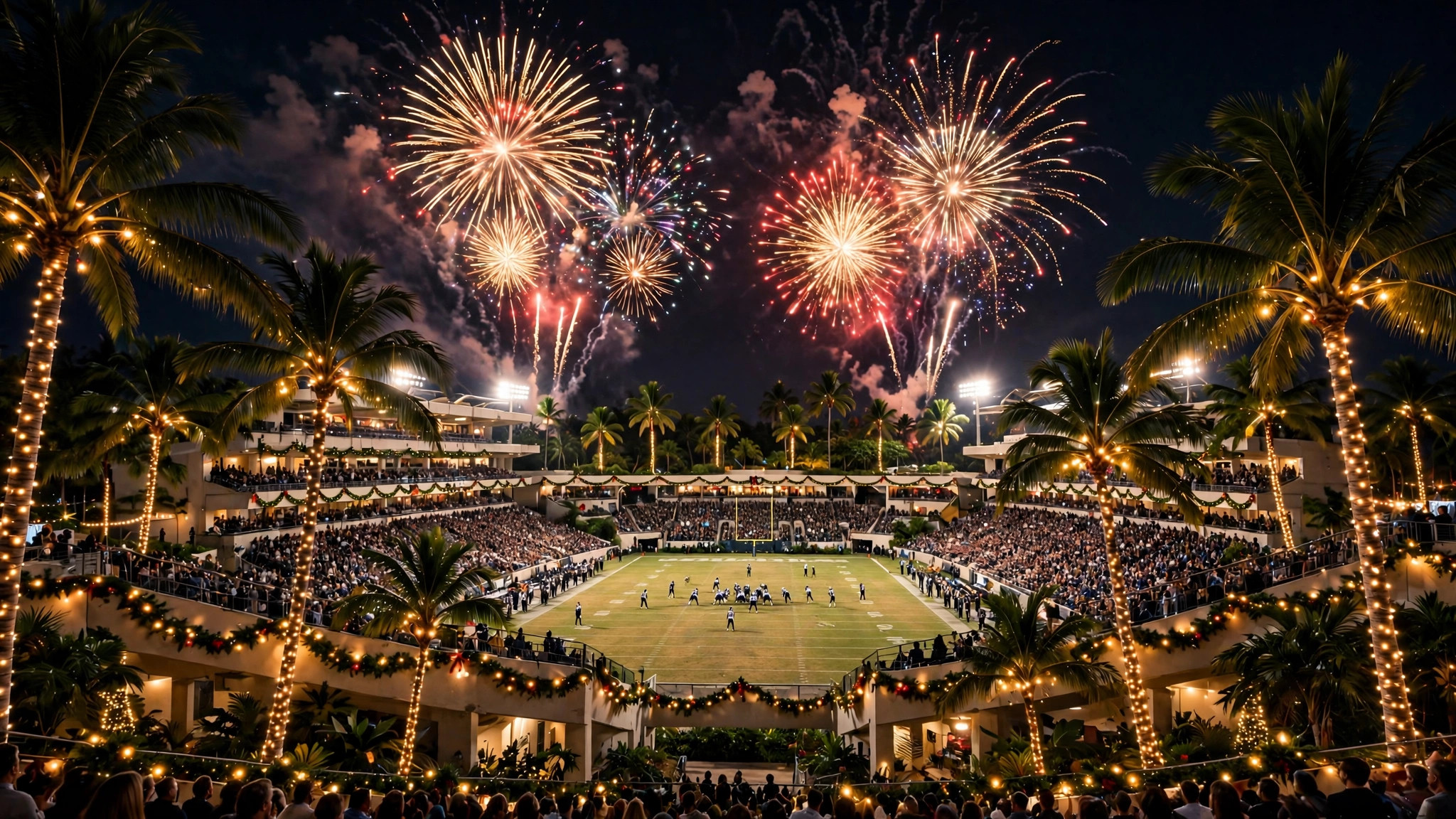
There is exactly one bowl game where the home team might not have to leave its own stadium, and it is played on a tropical island on Christmas Eve. Hawaii Bowl football is one of the sport’s most distinctive postseason traditions. This guide explains how the bowl works, who plays in it, how its history unfolded, and what fans need to know about tickets and television.
The basics first: the Hawaii Bowl has been played in Honolulu since 2002, is operated by ESPN Events, and is traditionally staged on or around December 24. It matches a team from the Mountain West Conference against an opponent from the American Conference or another partner league. And by design, whenever the Hawaii Rainbow Warriors are bowl-eligible, the Mountain West’s spot belongs to them.
University of Hawaii Football Bowl Game
The arrangement that defines the bowl is sometimes called the Hawaii guarantee. Because the Rainbow Warriors face the longest travel in the FBS for every road game, the bowl guarantees the university of Hawaii football bowl game access on its home field whenever the team wins the six games needed for eligibility and is not selected for the College Football Playoff.
The effects are significant:
- Hawaii’s players get a postseason game without the mainland trip every other bowl team endures
- Local fans are guaranteed a rooting interest most years, which stabilizes attendance and television interest
- Opponents get a destination trip their players and fans genuinely enjoy
- The Rainbow Warriors have become the bowl’s most frequent participant, with ten appearances, more than any other program
Hawaii’s recent appearances have come at the Clarence T.C. Ching Athletics Complex, the on-campus facility that became the program’s home after Aloha Stadium closed. The setting is intimate compared with the old stadium, but a Christmas Eve crowd in Honolulu with the home team playing is one of bowl season’s great atmospheres. Our Hawaii football guide covers the program itself in full.
Who Plays in the Hawaii Bowl
So, who plays in the Hawaii Bowl in a given year? The formula starts with the Mountain West. If Hawaii is eligible, the Rainbow Warriors take the league’s slot. If not, another Mountain West team makes the trip. The opposing side rotates through the bowl’s partner conferences, most often the American Conference, with Conference USA a part of the bowl’s history as well.
The 2025 edition showed the formula at its best. California, newly settled in the ACC and available through the bowl-selection process, crossed the Pacific to face Hawaii in Honolulu. The Rainbow Warriors won 35-31 on Christmas Eve, in a game that doubled as a reunion: Cal’s interim coach that night was Nick Rolovich, who had been Hawaii’s head coach from 2016 to 2019 and its quarterback before that.
Recent editions illustrate the bowl’s range:
- 2023: Coastal Carolina beat San Jose State 24-14
- 2024: South Florida outlasted San Jose State 41-39 in a five-overtime marathon
- 2025: Hawaii beat California 35-31 in the Rainbow Warriors’ return to their home bowl
Hawaii Bowl History
The bowl began in 2002, filling the space left by the Aloha Bowl, which had been Honolulu’s postseason fixture from 1982 to 2000. Earlier island bowls, the Poi Bowl and Pineapple Bowl, date the city’s bowl tradition to the 1930s, and the O’ahu Bowl briefly shared the scene at the turn of the century. The Hawaii Bowl is its own event, run by ESPN Events, but it carries that long Honolulu lineage.
For most of its life the game was played at Aloha Stadium in Halawa, the 50,000-seat landmark that also hosted the NFL’s Pro Bowl for decades. When Aloha Stadium was closed for safety reasons after the 2020 season, the bowl followed the Rainbow Warriors to the Ching Complex in 2022, trading scale for intimacy.
Sponsors have rotated through the title: Sheraton held the naming rights for a decade from 2003 and returned as sponsor in 2025, with SoFi and EasyPost holding the role in between. The game’s identity survived every change, because the formula — Christmas Eve, Honolulu, the home team — is bigger than any logo.
Memorable editions include shootouts, overtime marathons and Hawaii wins that felt like holidays unto themselves. The bowl’s record books are full of passing numbers, which fits: island air, motivated offenses and defenses diluted by bowl-season opt-outs tend to produce points.
Hawaii Bowl Tickets and Travel
For mainland fans, the Hawaii Bowl is as much a trip as a game. Honolulu in late December sells itself, and the bowl’s Christmas Eve slot means families can build a holiday around it. Tickets are sold through the bowl’s official channels and the participating schools, and the game’s home is the Hawaii Bowl’s official website.
Practical advice for the trip:
- Book flights and hotels early; Hawaii at Christmas is one of the most expensive travel windows of the year
- Remember the time difference when planning the return — the game ends late on the East Coast clock even when it starts in the Honolulu afternoon
- The Ching Complex is on the University of Hawaii campus in Manoa, a short trip from Waikiki
- Check the bowl’s official site for ticket on-sale dates, since allocations move once the matchup is announced
Because the stadium is small by bowl standards, a Hawaii appearance can make tickets genuinely scarce. If the Rainbow Warriors are in, buy early or expect secondary-market prices.
Memorable Hawaii Bowl Moments
Every bowl accumulates a highlight reel, and Honolulu’s is full of sunshine and points. The game’s early years established its shootout identity, with Hawaii’s run-and-shoot offenses treating the home bowl as a personal showcase. June Jones’ teams turned several editions into track meets, and the 2006 edition saw Hawaii hang 41 points on Arizona State in a holiday fireworks show.
The overtime era gave the bowl its wildest finishes. The 2024 game between South Florida and San Jose State needed five overtimes to settle a 41-39 final, the longest game in the bowl’s history and one of the longest in the sport that season. Bowl season’s newer overtime rules, built for quick resolution, still could not separate the teams until deep into the Honolulu night.
Other editions live in specific fan bases’ memories: Notre Dame’s 2008 visit and win, which remains the bowl’s biggest brand-name appearance; SMU’s dominant 2012 win, when June Jones returned to Honolulu with the Mustangs and beat Fresno State in a homecoming game for the former Hawaii coach; and a string of Hawaii wins that sent the home crowd into the Honolulu night believing, correctly, that there is no place in the sport quite like their stadium on Christmas Eve.
The Hawaii Bowl and Bowl Season Economics
The bowl exists inside an ecosystem worth understanding. ESPN Events owns and operates it as part of a portfolio of early bowl games that fill December television windows. For the participating schools, the value is a warm-weather reward trip, extra practice time that coaches prize for developing young players, and exposure in a standalone television slot that few early bowls can match.
For Hawaii, the economics are doubled. The home team saves the enormous travel cost that every Rainbow Warriors road trip involves, while the state gains a made-for-television advertisement in the middle of winter: palm trees, Diamond Head and football, broadcast into mainland living rooms on Christmas Eve. Tourism officials could not buy a better commercial.
The College Football Playoff’s expansion has reshuffled bowl season’s hierarchy, but games like this one have carved out their defense. The Hawaii Bowl does not compete with the playoff; it complements it, offering a destination, a tradition and a television window all its own. As long as Christmas Eve needs a football game, Honolulu has the best claim to providing it.
Planning a Hawaii Bowl Trip
If your team is selected, treat the announcement day as your starting gun. The practical sequence:
- Confirm the matchup and date through the bowl and your school’s athletics site
- Book flights immediately; Christmas-week fares to Honolulu climb by the day
- Choose lodging between Waikiki’s convenience and quieter neighborhoods if you are renting a car
- Build in island time; fans who fly in and out for the game alone miss the point of this bowl
- Watch for school-sponsored travel packages, which often bundle the logistics sensibly
Players describe the trip as the best reward in bowl season, and fans who make it once tend to understand why. Football is the excuse; Hawaii in December is the experience.
Why Hawaii Bowl Football Hits Differently
Ask players who have been, and a theme emerges: Hawaii Bowl football feels less like a consolation prize and more like a reward the sport’s calendar hides in plain sight. The week includes beach days, a luau-style welcome and community events that mainland bowls imitate but cannot reproduce, because the setting is the genuine article.
Coaches value the trip for a different reason. Bowl practices are developmental gold — fifteen extra sessions for young players — and doing that work in Honolulu keeps a roster engaged in a way a cold-weather bowl city rarely does. Hawaii Bowl football, in other words, is good business for everyone involved: the teams get development and morale, the fans get a holiday, the islands get the spotlight, and television gets a Christmas Eve tradition that no other game can copy. That combination is why, sponsor names and stadium changes notwithstanding, this bowl’s place in the December lineup is among the most secure in the sport.
How to Watch the Hawaii Bowl
The bowl is an ESPN Events property, and its games air on ESPN’s networks, traditionally in a standalone Christmas Eve window that gives it the night to itself. That scheduling is part of the bowl’s magic: for many fans, the game is the soundtrack of Christmas Eve, playing while the holiday settles in across the mainland.
Kickoff in Honolulu comes in the late afternoon local time, which lands in primetime in the eastern United States. Streaming follows the network assignment through ESPN’s platforms. Fans building a full bowl-season viewing plan can compare game lengths and windows with our how long are football games explainer — useful when five overtimes, as in 2024, turn Christmas Eve into Christmas morning.
If you are new to bowl season’s wider landscape, our college football 26 guide shows how the sport’s video game era celebrates these very bowls. However you watch, the Hawaii Bowl earns its place: no other postseason game looks, sounds or feels quite like football in Honolulu on Christmas Eve. Add it to your December traditions, and you will understand why fans who discover this game tend to keep it for life.
