

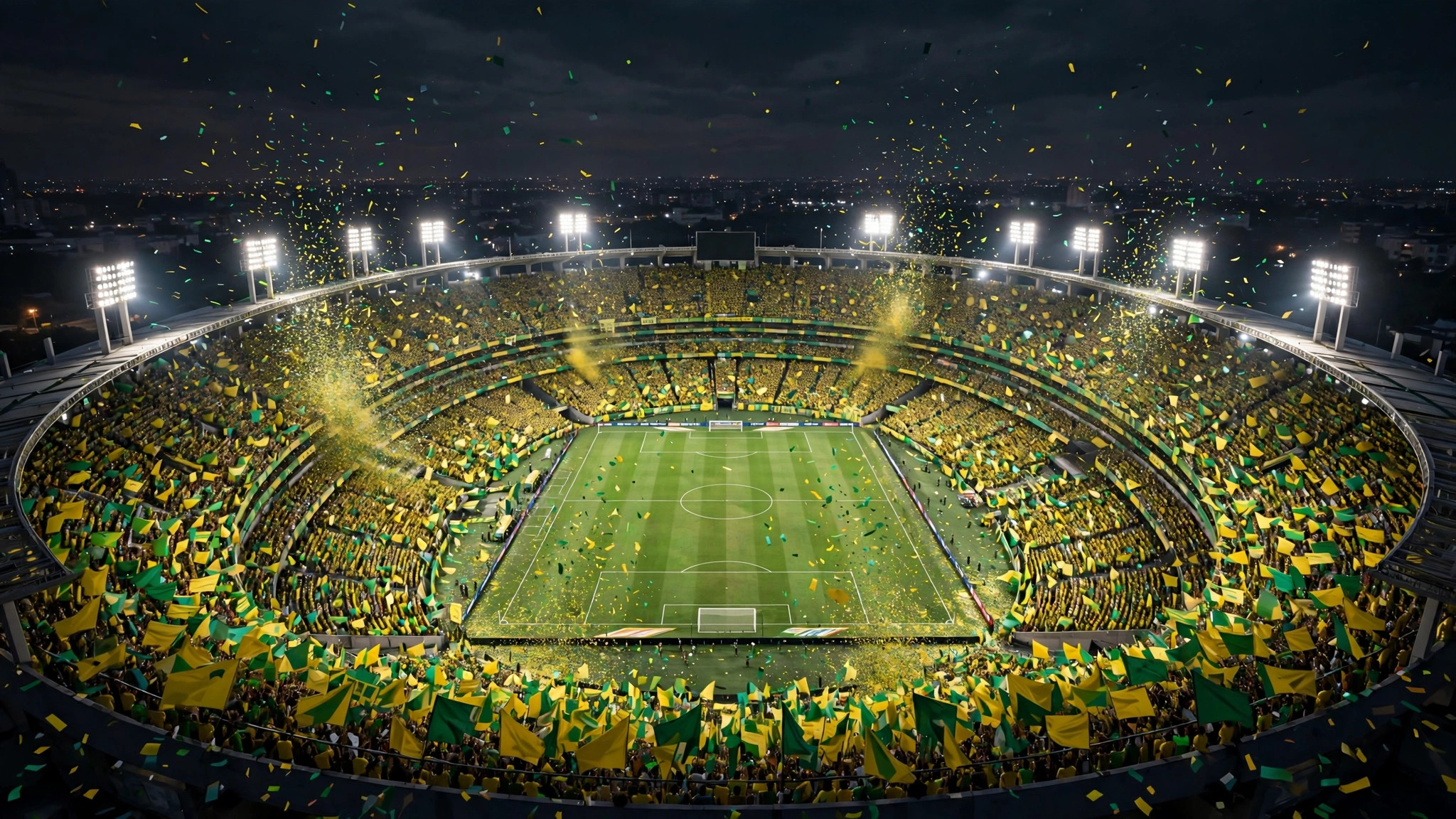
Brazil is the most successful team in World Cup history — five stars above the crest — and the most romantic draw in world football. Wherever the Seleção play, the yellow shirts take over the stadium, and the ticket market follows. Brazil national football team tickets are a permanent hot property: at World Cups, in South American qualifiers, and in the glamour friendlies that promoters stage from London to Los Angeles. This guide explains how those tickets are sold, which channels are official, what the biggest matchups do to prices, and how to buy without falling for the scams that follow this team everywhere.
The system has two doors. Tournament tickets belong to FIFA and its phased sales. Everything else — qualifiers, home friendlies, away tours — runs through the Brazilian Football Confederation (CBF), host federations and promoters. Knowing which door applies to your match is most of the battle.
Brazil National Football Team Tickets: Where They Are Sold
For World Cup matches, FIFA.com/tickets is the only official seller. The process runs in phases: a random selection draw, first-come, first-served windows, and last-minute sales before the tournament. Brazil’s allocation of applications in every phase is among the largest in the world, powered by a domestic fan base of 200 million and a diaspora on every continent. Brazil group games sell out; Brazil knockout games sell out instantly.
Federation allocations sit alongside the public phases. FIFA reserves tickets for each team’s supporters at its matches, distributed through the national federation — for Brazil, the CBF. At World Cup 2026, that structure includes the $60 Supporter Entry Tier, a fixed-price category for verified loyal fans covering all 104 matches, including the games of the five-time champions. Access runs through federation supporter programs, so fans who follow Brazil regularly should register with the CBF’s channels long before a tournament.
At home, Brazil rotates qualifiers and friendlies among its great stadiums — the Maracanã in Rio de Janeiro, and arenas in São Paulo, Belo Horizonte, Salvador and beyond. Sales run through the CBF’s designated ticketing platforms, announced per match. The Maracanã is the spiritual home: the stadium that hosted the 1950 and 2014 World Cup finals, Pelé’s thousandth goal and six decades of Seleção mythology. A Brazil match there is the fullest expression of the country’s football religion, and its qualifiers against Argentina or Uruguay stand among the hardest home tickets in South America. Away tours, especially the annual friendlies in Europe and the United States, are sold by promoters and host venues — and priced to those markets. Fans can follow the team’s story in our roundup of the top football matches, fixtures and key moments.
brazil national football team vs morocco national football team tickets
Brazil–Morocco has quietly become one of the most attractive fixtures in the international game. The teams met in the 1998 World Cup group stage, and Morocco’s rise — semi-finalists in 2022, with an elite generation developed across Europe’s top leagues — has turned any rematch into a meeting of five stars against Africa’s standard-bearers. The 2023 friendly in Tangier, which Morocco won, proved the appetite: a packed stadium and a global television audience.
If the pairing is drawn at a World Cup, expect group-stage demand closer to a knockout tie. Both fan bases travel in color and in numbers, and both federations’ allocations will be heavily oversubscribed. The draw phase is the moment that matters: apply early, spread your category choices, and register with both FIFA’s portal and federation supporter channels where eligible.
Resale prices for a fixture like this inflate quickly once the draw is set, because neutral fans target it as a match of the round. The official FIFA resale marketplace is the only secondary channel that transfers tickets inside the official system — for this pairing, treat every other offer with suspicion.
brazil national football team vs haiti national football team tickets
Brazil–Haiti meetings are rare, warm and lopsided on paper — and genuinely joyful occasions. The famous chapter came at the Copa América Centenario in 2016, when Brazil won 7–1 in Orlando, yet the night is remembered as much for the Haitian supporters who turned the stadium into a festival as for the score. Haiti’s football carries a huge diaspora following in Florida and the Northeast United States, which shapes the ticket story whenever the teams meet on American soil.
For buyers, this is one of the friendlier Brazil fixtures. If it arrives as a World Cup group game, it will be among the more accessible Brazil tickets in the tournament — but “accessible” is relative with the Seleção: apply in the draw anyway, because the Brazilian end sells regardless of the opponent. If it arrives as a friendly or a regional tournament game, tickets run through the host venue and promoter, often at prices far below World Cup levels.
Haiti’s federation allocation is small, and the Haitian support in US host cities is large, so the atmosphere at these games punches far above the fixture’s competitive weight. Fans who want the Brazil experience with a festival crowd and a (slightly) softer market should have this pairing at the top of their list. Our profile of the Argentina national football team shows the same diaspora effect from the other side of South America’s great divide.
scotland national football team vs brazil national football team tickets
Scotland and Brazil have a World Cup history written in gorgeous defeats: the 1982 classic in Seville, when Zico, Sócrates and Falcão beat a Scotland team that dared to score first; the 1990 meeting in Turin; and the 1998 opener in Paris, when Brazil edged the Scots 2–1 to launch the tournament. The Tartan Army adores this fixture — Brazil are the opponents Scotland’s fans most love to face and least expect to beat — and any modern edition would be a bucket-list game for both supports.
Scotland’s return to the World Cup stage after a long absence adds another layer: the Tartan Army travels in tens of thousands, in kilts and good humor, and takes over host cities for a week. If a draw pairs them with Brazil, the combined carnival of the two most colorful fan bases in the sport would make it one of the hottest group-stage tickets in the tournament, full stop.
Both federations’ allocations would vanish instantly; the Scottish FA’s supporters club points system rewards its most loyal travelers, and the CBF’s channels serve the Brazilian end. For everyone else, the FIFA draw, maximum category flexibility, and early travel booking are the whole game. Neutral fans should treat this as the group stage’s party fixture and plan accordingly.
There is a final, practical wrinkle unique to this pairing: fan culture logistics. Brazil’s support traditionally gathers in enormous pre-match rodas and fan-zone concerts, while the Tartan Army occupies city squares with pipes and drums. Host cities plan for both, and the official fan festivals become destinations in their own right on the days around the game. Arrive a day early, and the fixture gives you two festivals for the price of one ticket.
Brazil’s Global Tour: Friendlies, Promoters and the Diaspora Market
Between tournaments, Brazil are the world’s most in-demand touring team. Promoters pay premium fees to bring the Seleção to London, Paris, Los Angeles, Boston and Tokyo, because the yellow shirts sell every seat at entertainment prices. These “global tour” friendlies are, for most fans outside Brazil, the single most practical way to see the team live: no lottery, no federation points system, just a conventional on-sale through the venue and its official ticketing partner.
The catch is pricing. Promoters price Brazil like a headline concert, and the best seats at a US or European friendly can cost more than a World Cup group game. The value sits in the upper tiers and the ends, where the view is fine and the atmosphere — Brazilian fans turn even a friendly into Carnival — is the real product. Buy at the on-sale; resale for these games usually softens as kickoff approaches, the opposite of tournament behavior.
The diaspora shapes every date. London’s Brazilian community, the huge Brazilian populations of Florida and Massachusetts, and Japan’s long-standing Brazilian links mean the “away” crowd is often half the stadium. It also means these matches sell across two markets at once, and announcements in Portuguese-language media can precede the English-language on-sale news. Follow the CBF’s official channels alongside the venue’s if you want the first word.
Brazil’s touring calendar also serves a football purpose: testing young squads against European systems between qualifiers, the kind of tactical exercise fans can preview in our study of how the giants set up against each other in the Portugal vs Spain lineups breakdown. For ticket buyers, the pattern is what matters — the tour returns every year, the stars usually travel, and the on-sale is a fair fight for anyone who is registered and ready when it opens.
One last structural point: friendly tickets are ordinary event tickets. They are transferable under the venue’s normal rules, sold through mainstream platforms, and protected by standard consumer guarantees in most markets — a simpler world than FIFA’s closed digital system. That simplicity is exactly why the tour is where casual fans should start their Brazil journey, saving the draw-phase wars for the tournament itself.
Prices, Resale and Staying Safe
Brazil’s World Cup prices follow FIFA’s dynamic pricing: group-stage seats started from about $60 in the lowest categories in early phases, with premium seats and knockout rounds climbing into the hundreds and thousands; a Brazil semi-final or final ticket sits at the very top of the market. Home qualifiers through the CBF are priced for Brazilian fans and are far cheaper, though the Maracanã’s biggest nights still sell out. US and European tour friendlies are priced by promoters at local entertainment rates.
Resale discipline is non-negotiable with this team. FIFA’s official Resale/Exchange Marketplace is the authorized secondary channel for World Cup tickets, with seller-set prices and fees on both sides. Established resale platforms with buyer guarantees are the fallback for friendlies and qualifiers. Screenshots, PDFs and social-media brokers are not tickets — for Brazil matches, they are the fraud industry’s favorite product.
A short checklist for Seleção fans:
- Register with FIFA’s portal and CBF channels before any sale opens.
- Apply in the draw phase and stay flexible on categories.
- Buy qualifiers and tour friendlies early; Brazil sells out “small” games too.
- Confirm fixtures and venues only against the official schedule.
Brazil live is a carnival with a football match inside it. The fans who get in are the ones who prepared like it mattered — start at FIFA’s official ticketing portal and follow the official routes all the way to the gate.
