

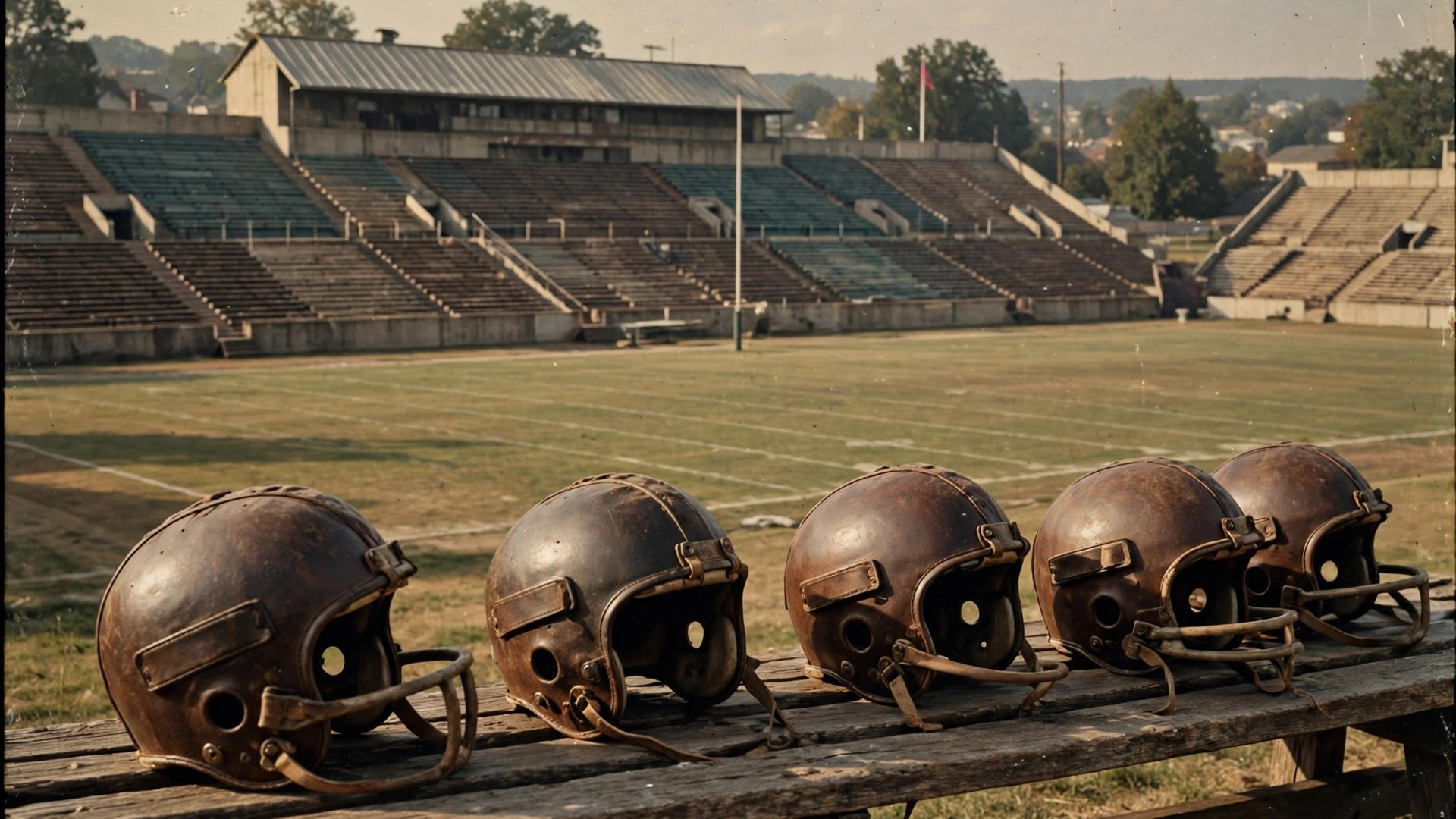
Every Memphis fan has heard an older relative say it: “Memphis State.” For most of the twentieth century, that was the school’s name, and Memphis State football built the foundation everything since has stood on. This history walks through where the name came from, the eras the Tigers played under it, the stars who wore it, and how the 1994 change to the University of Memphis closed the book without erasing the legacy.
The school opened in 1912 as West Tennessee State Normal School, a teachers’ college, and fielded its first football team that same year. The name on the door changed as the institution grew: it became Memphis State College in 1941 and Memphis State University in 1957, by which time the football program was a going concern with a stadium, a fight song and a tiger on the helmet.
Memphis State Tigers
The Memphis State Tigers nickname traces to the school’s earliest years. Students wanted to be called Tigers, and the name stuck through every institutional renaming that followed. The colors settled into blue and gray, a nod, local lore holds, to a city and a student body that had lived on both sides of the Civil War divide — a unifying gesture in a divided era.
On the field, the Tigers’ identity took shape at a series of Memphis homes: early campus fields, then Crump Stadium in midtown, and from 1965 the Liberty Bowl Memorial Stadium, the big bowl on the fairgrounds that the program still calls home today under its modern name, Simmons Bank Liberty Stadium.
What defined the Memphis State Tigers across the decades:
- Independence for most of their history, scheduling regional powers without a conference safety net
- A giant-killer streak, with periodic upsets of SEC neighbors that became local legend
- A loyal Memphis fan base that treated the Tigers as the city’s team long before professional franchises arrived
Memphis State Game
Any single Memphis State game you pick from the archive tells part of the story, but a few eras stand out. Billy J. “Spook” Murphy, head coach from 1958 to 1971, built the program’s first sustained winner. His teams won Missouri Valley Conference titles in 1968, 1969 and 1971 after the school joined that league, and his name still anchors the athletic department’s history — the football complex carries it today.
The program’s early decades had flashes too. The 1938 team, coached by Allyn McKeen, went undefeated at 10-0. Before conferences and television, that was the kind of season that built a local following one Saturday at a time.
The final Memphis State game came in the autumn of 1994, months after the name change took effect on July 1 of that year. Chuck Stobart’s last team finished 6-5 under the new University of Memphis banner, closing the Memphis State football era with a winning record and a win at Ole Miss — the Tigers beat the Rebels 17-16 in Oxford that November, the program’s first win there. Fans who want the modern program’s full picture can start with our Memphis football guide.
The Road to Memphis State University
The school’s growth drove the names. Founded to train teachers, it broadened into a full college in 1941, gained university status in 1957, and spent the second half of the century becoming the comprehensive research institution Memphis needed. Football grew with it in fits and starts:
- 1912: the first team, playing as a normal school squad
- 1920s-30s: conference memberships in the Mississippi Valley and SIAA, with titles in 1929, 1930 and the unbeaten 1938 season
- 1943-46: no football during the Second World War
- 1968-73: the Missouri Valley Conference years and Murphy’s peak
- 1974-94: a long independent stretch, scheduling nationally while the program searched for a conference home
University histories are documented at Memphis’s athletics website and in the university’s own records; the name-change lineage — normal school to Memphis State College (1941), Memphis State University (1957) and the University of Memphis (1994) — is the spine of the story.
Stars of the Memphis State Era
The players who made the Memphis State name famous deserve their own roll call. Isaac Bruce is the headliner: the wide receiver played his college ball as a Memphis State Tiger in the early 1990s, was drafted in the second round by the Rams in 1994 — the final draft class of the Memphis State era — and went on to a Hall of Fame professional career.
Before Bruce, the Murphy-era teams produced a string of tough, regionally famous players, and the program’s record books are still dotted with names from the independent years: quarterbacks who traded punches with SEC opponents, backs who carried offenses on thin rosters, and defenders who made the Liberty Bowl a miserable trip for visitors.
The broader sports culture mattered too. Memphis State basketball’s run to the 1973 national title game under Gene Bartow made the name nationally visible in a way football alone never had, and the goodwill lifted every program on campus. When the university modernized its name in 1994, it was building on recognition that “Memphis State” had already earned.
For a look at another program whose name and identity carry deep history, see our Liberty football guide and the Montana State football guide, both programs with proud roots of their own.
Life as an Independent: The Memphis State Gamble
The most distinctive feature of the Memphis State era is how long it lasted without a conference. After leaving the Missouri Valley in the early 1970s, the Tigers spent two decades as a football independent, a status that offered freedom and danger in equal measure. Independents scheduled who they wanted — and Memphis State regularly lined up SEC opponents, regional rivals and intersectional names — but they had no conference championship to chase, no shared television money and no automatic bowl tie-ins.
The gamble shaped the program’s character. Without a league safety net, every season was a referendum, and the Tigers’ best independent teams are remembered for the giants they troubled rather than the standings they climbed. It also shaped the fan base: Memphis learned to measure its team against the best visitors on the schedule, a habit that persists in how the city judges the modern program.
The independent years explain the relief when Conference USA formed in the mid-1990s with Memphis as a charter football member. The new league, announced in April 1995 with football play beginning in 1996, finally gave the Tigers what the Memphis State era never had: a championship race of their own. The modern program’s later rise — the 2014 shared conference title, the 2019 outright championship and Cotton Bowl berth — grew directly from roots planted in that decision.
Memphis State’s Place in the City’s Sports Story
To understand why the old name still resonates, remember that for most of the twentieth century, Memphis State was Memphis sports. The city had no major professional franchise until the Grizzlies arrived in 2001. The Tigers were the home team for generations of Memphians who never attended the school, and football Saturdays at the Liberty Bowl were civic events.
The stadium itself is shared civic ground: built in 1965 and later renamed for the Liberty Bowl game it hosts, it has staged the Tigers, the bowl and decades of the city’s biggest outdoor gatherings. When the program played as Memphis State, the bowl and the team grew up together in that building, and the fairgrounds around it became the city’s autumn living room.
That civic role never transferred away. The name on the jersey changed in 1994, but the relationship between the team and the city did not, which is why “Memphis State” survives as a term of affection rather than a correction. It names the era when the Tigers were all Memphis had — and, for many fans, still are the first team they ever loved.
Memphis State Football Legacy Today
The legacy shows up in the modern program’s record book and rituals. Career lists still carry Memphis State-era names alongside the new stars, the alumni who return for homecoming span both names, and the athletic department’s own historical displays treat the eras as one continuous story, because they are.
Programs that change names often struggle with fractured identities. Memphis avoided that trap by keeping everything else constant: the Tigers, the blue and gray, the stadium, the city. The 1994 rename was a university growing up, not a program starting over, and the history in this guide — from the 1912 teachers’ college team to Murphy’s champions to Bruce’s brilliance — belongs to the modern Tigers as fully as anything that happened last season.
How to Explore Memphis State History Yourself
Fans who want to go deeper have good options. The university’s record books and media guides, published by the athletics department, carry season-by-season results reaching back to 1912, including the Memphis State decades in full. The Liberty Bowl stadium’s own history is intertwined with the team’s, and Memphis’s public libraries hold newspaper archives that covered the Murphy era game by game.
Old-timers’ stories are the other archive. Ask a Memphis fan of a certain age about the first Tigers game they attended, and the answer will come with a Memphis State memory attached — a cold night at the fairgrounds, a star turn by a forgotten running back, a win over a ranked visitor that the city talked about for a month. Oral history is how programs like this one really keep their past, and the Memphis State chapters are told with particular affection.
Why the Name Changed in 1994
By the 1990s, “Memphis State” no longer described the institution. The school had doctoral programs, a law school, a growing research profile and ambitions that the word “State” — a leftover of its normal-school origins — was underselling. On July 1, 1994, the University of Memphis was born, with the same Tigers, the same blue and gray and the same stadium.
Conferences followed quickly. Memphis helped found Conference USA in the mid-1990s, ending the independent wandering, and later moved to the American Conference, where the program’s modern golden age — the 2014 conference title, the 2019 Cotton Bowl season — took place under the new name.
Old-timers still say Memphis State, and nobody corrects them with much force. The name carries the Murphy years, the 1938 perfect season, Bruce’s brilliance and generations of Saturday memories. Names on the door change; the Tigers remain. That continuity, from a teachers’ college team in 1912 to a modern FBS program, is the real history: one program, one nickname, one city, and a century of football binding them together. However you first learned the name, the story rewards the telling.
