

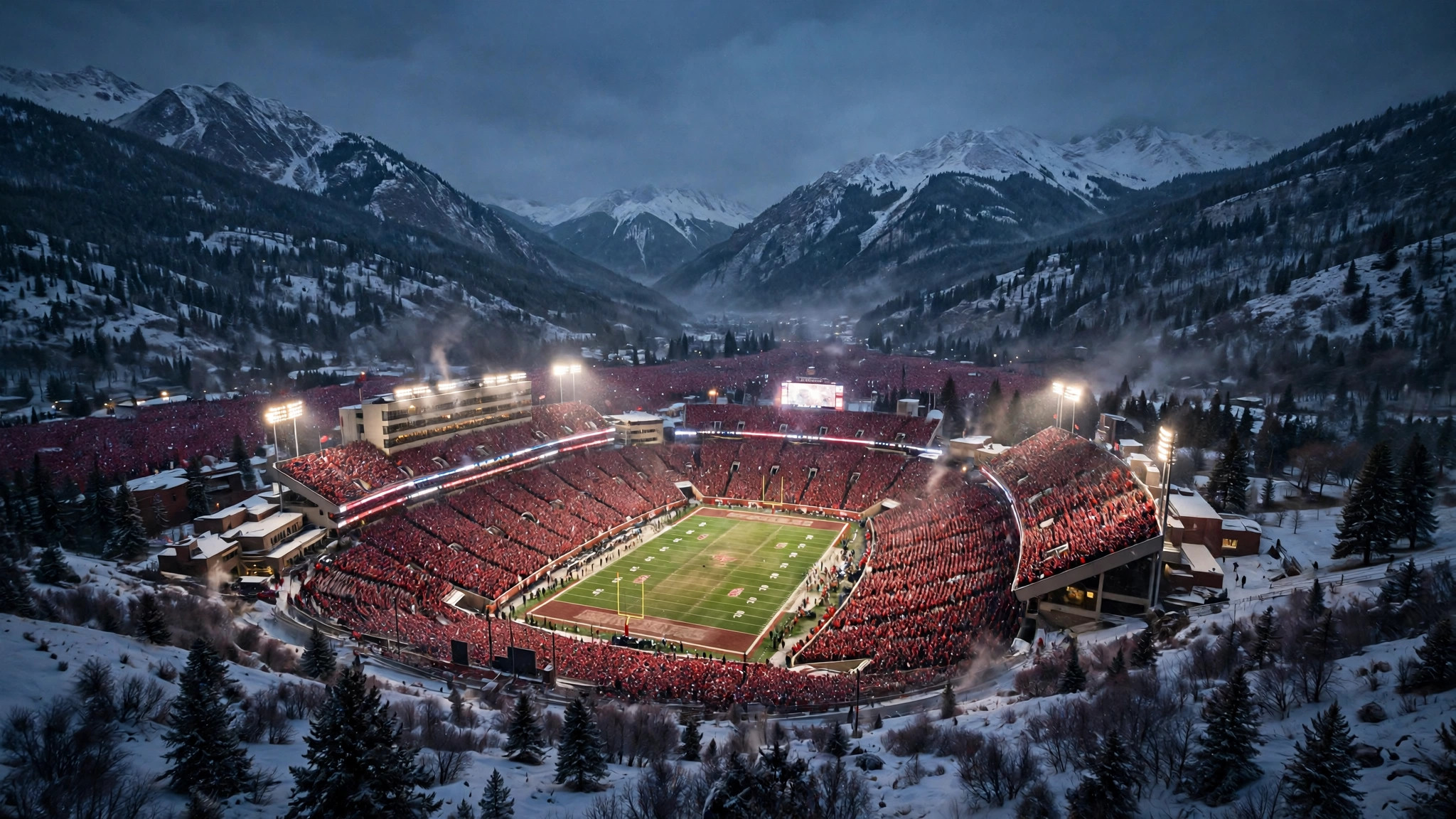
Some schedules are lists. Utah’s is a terrain map. The Utah football schedule runs through altitude, desert heat and plains wind, anchored by a stadium 4,600 feet above sea level and a rivalry with its own religious vocabulary. This guide explains how the Utah football schedule is built — the Big 12’s nine-game framework, the Holy War’s placement, the bye weeks, the home-and-away math — plus how kickoff times and television channels are assigned, which games will decide the Utes’ season, and how to plan a trip to Rice-Eccles Stadium, the only college venue that has hosted an Olympic opening ceremony.
Whether you are a season-ticket holder in the MUSS’s alumni rows or a Big 12 visitor picking one road trip, start with the structure. In this league, geography is destiny.
Utah Football Schedule: How the Season Is Built
A Utah football schedule contains twelve regular-season games: nine in the Big 12, assigned by the league’s rotation across its sixteen teams, and three nonconference games the school schedules itself. The Utes’ nonconference pattern reflects their map — regional opponents from the Mountain West footprint, a peer power-conference fixture when the calendar allows, and the occasional season-opening statement game of the kind Utah made at UCLA in 2025, a 43-10 win that functioned as the program’s Big 12 calling card.
Six wins secure a bowl; the conference’s top two reach the Big 12 Championship Game in Arlington in early December, with the College Football Playoff beyond it. The league’s defining feature is parity — no divisions, no soft quadrants, and a rotation that sends Utah from Provo to Lubbock to Orlando within single seasons. Coaches in this league read the schedule for travel clusters the way sailors read weather: the team that manages its Octobers plays in December.
One or two bye weeks are woven in by the league office. For Utah specifically, their placement interacts with the program’s greatest asset — more on the altitude math below.
Utah Utes Football Schedule: Home Fortress, Road Gauntlet
The Utah Utes football schedule splits into two very different documents. At home, the Utes play at Rice-Eccles Stadium, where the elevation thins visiting lungs, the MUSS thins visiting composure, and Utah’s home record across the last decade stands among the nation’s best. Opponents game-plan for Salt Lake City the way they game-plan for weather: hydrate for a week, simplify the no-huddle, shorten the rotation — and still, by the fourth quarter, the 4,600 feet sends its invoice.
On the road, the Big 12 deals Utah the league’s most varied travel: the Holy War in Provo, forty-five minutes and a universe away; Texas trips to Lubbock, Fort Worth and Waco; the plains schools; and the league’s far-flung eastern members. The staff’s travel operation — charter timing, sleep discipline, altitude-to-flatland adjustments — is a quiet program institution, refined across three conferences’ worth of maps.
The honest fan’s method: grade the schedule by its road clusters. Two straight road weeks in October is the season’s hinge, wherever it falls; a November that ends with home dates is a gift the standings usually repay.
The Holy War: The Schedule’s Fixed Star
Every Utah season orbits one date. The Holy War against BYU — the subject of a dedicated rivalry guide in this batch — is among the most intense fixtures in American sports: a century old, split along the state’s cultural seams, and restored to annual conference status by the Big 12’s map after years in the nonconference wilderness. When it is played in Salt Lake City, it is the hardest ticket in the state; in Provo, it is the same with the colors reversed. Either way, it is the game the whole season’s bragging rights, recruiting arguments and family dinners are indexed to.
Around it, the rivalry shelf arranges the calendar’s emotional support dates: the Rumble in the Rockies against Colorado, the in-state meeting with Utah State, and the Big 12’s emerging grudges. But the Holy War is the sun. Plan your autumn accordingly — Utahns do, starting with weddings, which are simply not scheduled against it by anyone who wishes the couple well.
Key Games and the November Standard
Utah’s seasons are graded in November, because Utah’s program is built for November: depth on the defensive line, a running game that improves as the weather worsens, and a home stadium that turns cold and loud in the season’s final month. The key games on any Utes schedule are therefore predictable in kind if not in name — the Holy War, the visit from the league’s preseason favorite, and the road trip to the contender whose stadium Utah’s fans have marked as the season’s examination.
The 2025 season supplied the modern template in its very first week: a nationally televised opener, on the road, against a Big Ten brand — won by thirty-three points with a transfer quarterback announcing himself. Contenders are not supposed to peak in August; Utah’s schedule simply keeps offering examinations early, and the program keeps passing them in a way that rearranges the league’s expectations by Labor Day.
Fans comparing conference frameworks can set Utah’s calendar beside the SEC version in our LSU football schedule guide, or the Big Ten’s in our Penn State football schedule breakdown — the December destinations are the same; only the weather on the way differs.
Kickoff Times, TV Channels and the Late Window
Utah’s kickoff times are assigned by the Big 12’s television partners — the ESPN and FOX families and their streaming platforms — typically six to twelve days before each game. The Mountain Time Zone gives the Utes a signature slot: the late national window, kicking off around 8 p.m. local, when Rice-Eccles under lights becomes one of the sport’s great television pictures and the East Coast audience is deciding whether to stay up. Utah fans have embraced the slot as identity; the “Pac-12 After Dark” inheritance lives on in the Big 12’s late inventory, and the Utes are its most reliable landlords.
The fan routine is the league standard: the date is fixed, the hour is a rumor until game week, and the official schedule page is the only confirmation worth booking travel against. Day games in September bring the Wasatch sun; night games in November bring the cold that the home crowd wears as a badge. Choose your trip by which Utah you want to meet.
The Fan’s Calendar: Utah’s Season in Four Phases
For the fridge door, the Utes’ autumn divides cleanly:
- September: statement openers and nonconference tests — the month Utah used in 2025 to announce itself at UCLA.
- October: the Big 12 grind at full density, when the travel and the league’s parity-tax come due together.
- November: the program’s native month — Holy War stakes, cold home nights at altitude, and the conference race decided.
- December: Arlington for the top two, a bowl for the eligible, and the signing period beginning the next version of the argument.
Pin the phases up in August and the season reads itself: each Saturday’s question is printed on the calendar before the standings bother to ask it.
The Altitude Variable: Reading Utah’s Splits
One analytical habit pays for itself all season: read Utah’s home and road splits as two different teams. At home, the Utes’ defensive pressure rates climb, opponents’ fourth-quarter efficiency falls off the table, and the MUSS-assisted false-start column quietly fattens Utah’s margins. On the road — particularly in the flatland stadiums of Texas and the plains — the same roster plays closer to its recruiting rankings, which is still good and noticeably less terrifying.
The schedule interacts with the split in ways worth circling. A road-heavy October is the annual danger zone; a November that returns the Utes home for its biggest games is the fixture list’s gift, and the conference race’s history says the gift is usually accepted. When the dates drop each winter, Utah fans perform this analysis instinctively — count the November home dates, find the back-to-back road weeks, locate the Holy War — and the rest of the calendar is commentary. It is the correct order of operations, and this guide recommends it to fans of every Big 12 program: your team’s splits are your schedule’s truth, and the standings in December are usually just the splits, added up.
Bowl Season and the December Ladder
Utah’s relationship with December is a program biography in itself. The Utes were the original BCS busters — the 2004 team’s Fiesta Bowl win forced the sport to open its postseason doors, and the 2008 team’s Sugar Bowl dismantling of Alabama slammed the argument shut. The Rose Bowl trips of the Pac-12 championship years added the traditional crown, and the program’s bowl history since — a near-annual appointment across two decades — is the quiet metric of the Whittingham era’s floor: Utah does not have down decades, it has down Saturdays.
The Big 12’s bowl ladder now routes the Utes through the league’s tie-ins, and the playoff’s twelve-team field has changed the ceiling’s arithmetic: a two-loss Utah team with its defensive profile is precisely the kind of November problem the expanded bracket was built to include. Fans planning December should hold the first weekend for Arlington until told otherwise — the program has earned its supporters that optimism, and the schedule’s back half, altitude and all, is built to justify it.
Tickets, Travel and the Rice-Eccles Trip
Salt Lake City is the Big 12’s most convenient road trip: a major airport twenty minutes from campus, a light-rail line — TRAX — that delivers fans directly to the stadium’s door from downtown hotels, and a city that treats game weekend as an industry. Tickets run through the school’s official channels, with the Holy War and ranked visitors the fastest inventory; the enclosed south end and the MUSS’s sections are spoken for by season tickets long before single-game sales open.
Visitors should add the setting to the itinerary: the Olympic cauldron at the stadium’s south end, the Natural History Museum and the foothill trails above campus, and a downtown that rewards the extra night. The confirmed calendar — dates, kickoff times and television assignments as they are set — is maintained by the program at Utah Utes athletics, and our Arizona football guide covers the desert bookend of a western football autumn.
The Utah football schedule is an argument the program makes every year: that altitude, development and two decades of defensive standard can carry a season through any league’s map. Read it well, and the Utes’ autumn makes sense before the first kickoff — which, at 4,600 feet, with the Wasatch turning evening colors behind the stadium and the MUSS already at full volume, is rather the point of the whole exercise.
