

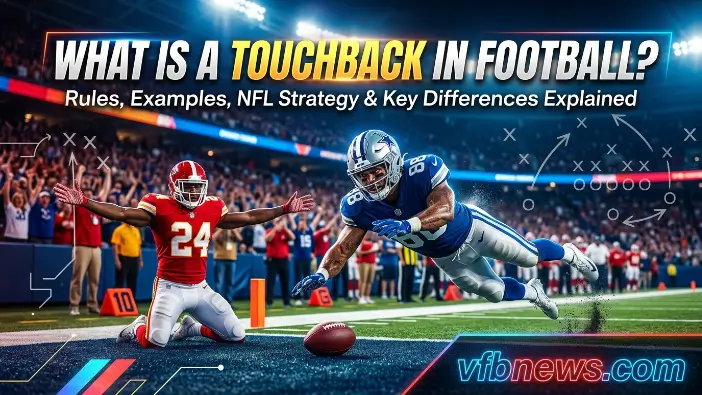
Welcome to VFB! If you’ve ever watched an American football game, you’ve likely heard commentators mention a touchback in football following a kickoff, punt, or turnover. Although the term may seem confusing to beginners, understanding it is quite simple once you learn the basic rules. A touchback determines where the offensive team begins its next possession and can influence field position, special teams, and overall game strategy.
Learning what a touchback is in football can help you better understand the game, whether you’re watching the NFL, college football, or high school football. In this guide, we’ll explain the official touchback rule, cover the situations in which it occurs, compare a touchback with a safety, and provide real-game examples to make everything clearer. You’ll also discover why teams sometimes choose to take a touchback instead of attempting a return. By the end, you’ll have a clear understanding of this essential American football rule and its impact on the game.
What Is a Touchback in Football?
A touchback in football is a common rule in American football that affects where a team begins its next offensive drive. While the term may seem complicated at first, the rule is easy to understand once you know how it works. A touchback can occur during a kickoff, punt, interception, or other specific game situations, depending on the circumstances. Understanding this rule helps you follow the action more easily and see how field position influences a team’s decisions.
Simple Definition
A touchback in football happens when the ball becomes dead in the receiving team’s end zone under specific conditions, allowing the team to begin its next offensive possession from a designated yard line without making a return. In simple terms, the officials stop the play, and the team receives the ball at a set field position. Touchbacks most commonly occur on kickoffs, but they can also happen on punts, interceptions, fumbles, and certain missed field goals.
For beginners, a touchback can be understood as a way to start a possession without attempting to advance the ball through a return. This can help the receiving team avoid the risks of a tackle, a fumble, or losing valuable field position. The exact starting yard line depends on the type of play and the level of football being played. By limiting unnecessary returns in certain situations, touchback rules can also improve player safety and make game situations easier to manage.
Official Rule Explained
According to the official rules of American football, a tA touchback in football is awarded when the ball becomes dead on or behind the receiving team’s goal line under specific conditions. Once the officials confirm that a touchback has occurred, the play ends, and the team gains possession at a designated yard line according to the rules of the league.
A touchback can happen in several situations, including:
- Kickoff: The ball enters the end zone and the receiving team chooses not to return it, or the play otherwise qualifies for a touchback.
- Punt: The ball reaches the end zone and becomes dead without a player carrying it out.
- Interception: A defender intercepts a pass in the end zone and the play ends under touchback conditions.
- Fumble: A loose ball enters the end zone and becomes dead under the applicable rules.
- Missed field goal: Certain unsuccessful field-goal attempts result in a touchback when the ball becomes dead in the end zone.
The exact spot where the offense begins its drive can vary between the NFL, college football, and high school football. However, the basic purpose remains the same: a touchback establishes a designated starting position and can eliminate the need for a risky return from the end zone.
Why a Touchback Happens
The football touchback rule exists for more than just restarting play. It improves player safety, creates consistent field position, and adds an important strategic element to the game. Because kickoff and punt returns often involve high-speed collisions, allowing the receiving team to begin from a designated yard line helps reduce unnecessary contact and lowers the risk of injuries.
Coaches also use the touchback strategically. Kickers often try to send the ball deep into the end zone to prevent long returns, while return specialists must decide whether bringing the ball out is worth the risk. If they believe they cannot gain more yards than the standard touchback position, accepting the touchback is usually the smarter choice.
The rule benefits the game in several ways:
- Improves player safety during kickoffs and punts.
- Provides a consistent starting field position.
- Reduces the risk of turnovers on returns.
- Helps coaches execute better special teams strategy.
- Keeps the game flowing smoothly with fewer unnecessary plays.
Together, these benefits explain why the touchback has become such an important part of modern American football. Although it may seem like a simple ruling, it can significantly influence field position, momentum, and a team’s overall game plan.
Read Also: how big is a football field
When Does a Touchback Occur?
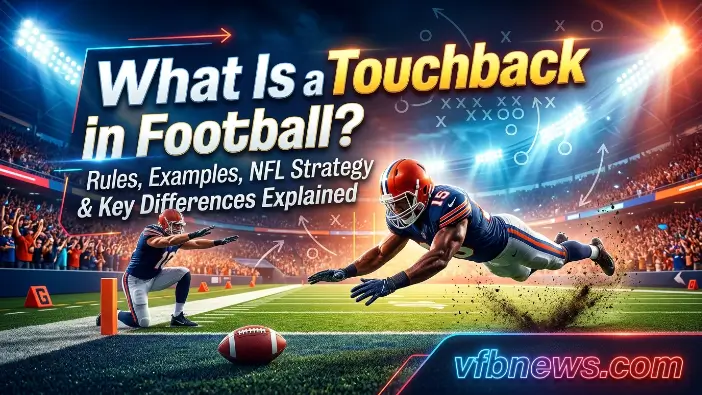
A touchback in football can happen in several game situations, with kickoffs being the most common example. When the ball enters the end zone and the play ends under specific conditions, officials may rule it a touchback, allowing the receiving team to begin its next possession from a designated yard line. The exact ruling depends on how the ball reaches the end zone and what happens next.
Touchback on Kickoffs
Kickoffs are the most common way a touchback occurs in football. A kickoff touchback happens when the kicker sends the ball into or beyond the receiving team’s end zone, and the return team decides not to bring the ball out. Instead, the play ends immediately, and the offense begins its next drive from the designated yard line.A kickoff touchback typically occurs when the ball reaches the end zone and the receiving team does not attempt a return, provided the play meets the touchback rules.
The process generally works as follows:
- The kickoff begins: The kicker sends the ball downfield toward the receiving team.
- The ball reaches the end zone: The kick travels into or through the end zone.
- The play ends: The receiving team takes a touchback or the play otherwise qualifies for one under the applicable rules.
- The offense takes possession: The receiving team starts its drive from the designated yard line.
Kickers often aim for touchbacks to prevent opponents from making dangerous or successful kickoff returns.
Touchback on Punts
A punt touchback occurs when the punt crosses the goal line or lands in the end zone and becomes dead before the receiving team can advance it. Unlike kickoffs, punters usually try to stop the ball just outside the goal line, so a touchback often means the kicking team missed an opportunity to pin the offense deep in its own territory.
A punt touchbThe process typically works as follows:
- The offense punts: The punter kicks the ball downfield after the team decides to give up possession.
- The ball approaches the goal line: The punt travels deep into the opponent’s territory.
- The ball enters the end zone: It lands, rolls, or travels into the end zone without being returned.
- The play ends: The officials rule a touchback when the required conditions are met.
- The receiving team takes possession: The offense begins its drive from the appropriate yard line.
Punters often use directional kicks, controlled distance, and strategic placement to keep the ball out of the end zone.
Touchback After an Interception
Although less common, a touchback can also happen after an interception. This occurs when a defender catches a pass inside their own end zone, and the play ends there instead of the defender attempting to ruAn interception touchback in football can occur when a defender intercepts a pass in their own end zone and the play ends under the applicable touchback rules. Instead of attempting to run the ball back, the defender allows the play to end, giving their team possession at a designated yard line.
A typical interception touchback works as follows:
- The quarterback throws a pass: The quarterback sends the football toward a receiver in the end zone.
- A defender intercepts the ball: A defensive player catches the pass before it reaches the intended receiver.
- The play ends in the end zone: The defender remains in the end zone and does not advance the ball out of it.
- Officials rule a touchback: If the play meets the required conditions, the officials award a touchback.
- The team begins its offensive drive: The team that made the interception takes possession at the appropriate yard line.
Taking a touchback can be a smart decision because it avoids the risks of attempting a return, including a tackle or fumble.
Touchback After a Fumble
A touchback involving a fumble is one of the more complex rules in football. It can occur when the ball becomes dead in the end zone under specA fumble touchback in football occurs when a loose ball enters the opponent’s end zone and becomes dead under specific conditions outlined in the rulebook. One well-known example is when an offensive player fumbles the ball forward into the opponent’s end zone, and the ball goes out of bounds before either team recovers it.
Here’s how this situation typically unfolds:
- The player approaches the goal line: An offensive player attempts to advance the ball into the end zone.
- The ball comes loose: A defender knocks the football free, or the offensive player loses control of it.
- The ball enters the end zone: The loose football travels across the goal line into the end zone.
- The ball goes out of bounds: Neither team gains possession before the ball leaves the field of play.
- The defense gains possession: Under the applicable rules, the play may result in a touchback, awarding the opposing team the ball at a designated yard line.
This rule can be frustrating for the offense because a fumble near the goal line may cost the team both a scoring opportunity and possession.
Missed Field Goal Touchback
A missed field goal can also result in a touchback if the kick becomes dead in the receiving team’s end zone. Instead of attempting a risky return, the receiving team is awarded possession at the designated yard line and begins its offensive drive.
A missed field goal touchback generally follows this sequence:
- A field goal attempt is unsuccessful.
- The ball reaches the end zone.
- The receiving team does not advance the kick.
- Officials rule a touchback.
- The offense starts from the designated yard line.
Whether a team chooses to return a missed field goal depends on the game situation, available blocking, and the distance of the kick. In many cases, accepting the touchback is the safer option because it guarantees a predictable starting field position.
Touchback Situations Comparison
| Situation | How the Touchback Happens | Result |
| Kickoff | Kick enters the end zone and is not returned. | Offense starts from the designated yard line. |
| Punt | Punt lands in or crosses the end zone and becomes dead. | The receiving team begins its offensive drive. |
| Interception | Defender catches the ball in the end zone and ends the play there. | Defensive team starts its next possession. |
| Fumble | Ball becomes dead in the end zone under touchback rules. | Possession is awarded according to the applicable rule. |
| Missed Field Goal | An unsuccessful kick becomes dead in the end zone. | The receiving team gains possession at the designated spot. |
The table above highlights the most common situations in which a touchback can occur. While each play happens differently, they all share the same basic outcome: the play ends, possession is awarded to the appropriate team, and the next offensive drive begins from a standard field position according to the rules.
What Happens After a Touchback?
After a touchback in football is called, the play ends immediately, and the receiving team begins its next offensive possession from a designated yard line rather than advancing the ball out of the end zone.
Where Does the Offense Start?
After a touchback in football, the offense does not have to start from the end zone where the play ended. Instead, officials place the ball at a predetermined yard line, giving the team a consistent starting point for its next drive. This rule eliminates confusion, creates a fair starting position, and helps the game resume efficiently.
For players and coaches, the touchback rule also plays an important role in strategy. Return specialists must evaluate whether bringing the ball out of the end zone is worth the risk. If they believe the return is unlikely to provide better field position than the designated touchback spot, taking the touchback is often the safer and more practical choice.
NFL Yard Line Rules
In the NFL, the ball is placed at a designated yard line based on the league’s current touchback rules. The exact spot depends on how the touchback occurs, such as after a kickoff, punt, interception, or other play. The NFL has revised its touchback and kickoff rules over time to enhance player safety while maintaining competitive balance.
As a result, teams carefully evaluate whether to return the ball or accept the touchback. Coaches often advise returners to take the guaranteed starting field position when the risk of a short or unsuccessful return outweighs the potential benefit of gaining additional yards.
College Football Rules
College football follows the same basic concept as the NFL, although the exact ball placement is determined by NCAA rules. Whenever a touchback occurs, the receiving team starts its offensive possession from the designated yard line specified in the current rulebook.
The goal is to provide a fair field position while reducing unnecessary contact during returns. Although the placement rules may occasionally change, the overall purpose of a touchback remains consistent across all levels of college football.
High School Football Differences
High school football also follows the touchback rule, although the exact starting field position depends on the rules adopted by the state’s athletic association. While ball placement may vary slightly from college and professional football, the basic principle remains the same.
Regardless of the level of competition, a touchback ends the play, awards possession to the appropriate team, and places the ball at a designated location for the next offensive series. Understanding this rule makes it easier to recognize touchbacks and follow the game, whether you’re watching an NFL matchup, a college football game, or a local high school contest.
Touchback vs Safety
Many new fans confuse a touchback in football with a safety because both involve the end zone. However, these rules have different outcomes. A touchback allows the appropriate team to begin its possession from a designated yard line, while a safety awards two points to the opposing team in most standard situations.
Major Differences
Although both plays happen in or around the end zone, they occur under different circumstances. A touchback happens when the ball becomes dead in the receiving team’s end zone after being sent there by the opposing team, allowing the offense to start its next drive from a standard field position. A safety, however, occurs when the offensive team causes the ball to A touchback and a safety occur under different circumstances in football.
The key differences include:
- A touchback does not award points.
- A safety awards two points to the opposing team.
- A touchback gives the appropriate team possession at a designated starting position.
- After a safety, the scoring team receives a free kick from the team that gave up the points.
The easiest way to distinguish between the two is to consider how the play ended and which team was responsible under the applicable rules.
Which Team Benefits?
A touchback benefits the team that receives possession because it starts the next offensive drive from a favorable field position. For example, after a deep kickoff, the return team may accept the touchback instead of risking a short return that leaves them closer to their own goal line.
A safety benefits the defensive team because it earns two points and receives possession after the required free kick. While offenses are usually happy to accept a touchback, defenses celebrate safeties because they create both scoring opportunities and favorable field position.
From a strategic point of view:
- Touchbacks help offenses avoid risky returns.
- Safeties reward strong defensive play.
- Both rules can significantly affect game momentum.
Common Fan Confusion
Because both rules involve the end zone, many fans misunderstand when a touchback or a safety should be called. A common mistake is assuming every ball that enters the end zone automatically results in a touchback. In reality, the play may continue if the returner decides to bring the ball out.
Another misconception is that every player who kneels in the end zone has committed a safety. If the player is entitled to a touchback on a kickoff or punt, no points are awarded. Likewise, a fumble that goes out of bounds through the opponent’s end zone results in a touchback rather than a touchdown.
Some common misconceptions include:
- Every ball in the end zone is not a touchback.
- Kneeling in the end zone does not always mean a safety.
- A fumble through the opponent’s end zone is not a touchdown.
Understanding these situations makes it much easier to identify the correct ruling during live games.
Touchback vs Safety Comparison
| Feature | Touchback | Safety |
| Awards Points? | No | Yes, two points |
| Where It Happens | Receiving team’s end zone | The offensive team’s own end zone |
| Who Benefits? | Team receiving possession | Defensive team |
| Possession After Play | Offense starts from the designated yard line | Team scoring the safety receives a free kick |
| Common Causes | Kickoffs, punts, interceptions, certain fumbles | Tackles, penalties, or dead ball in the offense’s own end zone |
Why Teams Sometimes Want a Touchback
At first, it may seem unusual for a team to willingly accept a touchback in football rather than attempt to gain extra yards on a kickoff or punt return. However, coaches and players carefully evaluate the risks and rewards before making this decision.
Field Position
One of the main reasons teams prefer a touchback is the benefit of consistent field position. Starting an offensive drive from a designated spot allows coaches to follow their game plan without worrying about beginning the series too close to their own goal line. It also gives the offense a more predictable starting point for its next drive.
If a returner believes they are unlikely to advance the ball beyond the standard touchback spot, accepting the touchback is often the smarter decision. This approach reduces the risk of a poor return, helps avoid unfavorable field position, and gives the offense a better opportunity to build a successful drive.
Reducing Return Risk
Kickoff and punt returns are among the most dangerous plays in football because they involve high-speed collisions and quick decision-making. A returner has only a few seconds to find running lanes, avoid defenders, and secure the football while advancing up the field.
Choosing to return the ball can lead to several risks, including:
- Being tackled deep in your own territory.
- Losing valuable yards compared to accepting a touchback.
- Fumbling the football during the return.
- Suffering a hard collision with the coverage team.
Because of these risks, many return specialists choose the touchback when the potential reward doesn’t outweigh the danger of a poor return.
Special Teams Strategy
Touchbacks also play an important role in special teams strategy. Coaches develop kickoff and punt plans to control field position, while kickers may aim for the end zone to limit the opponent’s return opportunities. Similarly, punters often try to place the ball close to the goal line without allowing it to enter the end zone, helping pin the opposing team deep in its own territory.
Player Safety
Player safety is another major reason teams welcome touchbacks. Kickoff returns can produce some of the hardest collisions in football because players often run toward each other at high speeds. By reducing the number of returns, touchbacks can help lower the risk of injuries for both the return team and the kickoff coverage unit.
For this reason, football organizations have introduced rule changes designed to make kickoffs safer while maintaining competitive balance. The continued evolution of the football touchback rule demonstrates how the sport is adapting to protect players while preserving the excitement and competitiveness of the game.
NFL Touchback Rule Changes
The football touchback rule has evolved over the years as the NFL has focused on improving player safety while maintaining competitive balance. Although the basic purpose of a touchback remains unchanged, the league has revised kickoff rules and adjusted ball placement at various times to reduce injury risks and create a fairer balance between offensive and defensive play.
Evolution of the Rule
In the NFL’s earlier years, kickoff returns were common because touchbacks often provided less favorable field position than they do under modern rules. As the game became faster and more physical, league officials increasingly recognized the need to reduce the risk of dangerous collisions during kickoff returns.
To address these concerns, the NFL gradually revised its touchback and kickoff rules, adjusting incentives for kickers and return teams to influence whether the ball would be returned. These changes aimed to reduce injury risks while preserving the excitement of kickoff returns and maintaining the overall flow of the game.
Recent Kickoff Changes
Recent NFL kickoff rule changes have continued to prioritize player safety while preserving the excitement of special teams play. The league has introduced revised kickoff formats and adjusted touchback rules to encourage more returns while reducing the risk of high-speed collisions between players.
Because the NFL periodically reviews and updates its rules, the exact field position awarded after a kickoff touchback can vary depending on the season and the circumstances of the play. Fans should consult the latest official NFL rulebook for accurate, up-to-date information about touchback placement and kickoff regulations.
Why the NFL Updated the Rule
The NFL has modified the football touchback The NFL continues to update its touchback rules to make the game safer while maintaining fair competition. These changes aim to reduce unnecessary risks without eliminating the strategic importance of kickoffs and special teams play.
Some of the main reasons behind these rule changes include:
- Improve player safety.
- Reduce injuries during kickoff returns.
- Encourage smarter coaching strategies.
- Provide more predictable field position outcomes.
- Maintain competitive balance throughout the game.
Together, these changes demonstrate the NFL’s commitment to protecting players while ensuring that kickoffs remain an important and exciting part of American football.
Real-Game Examples of a Touchback
The best way to understand what is a touchback in football is by looking at real-game situations. A touchback can happen in different ways, but the result is usually the same: the play ends, the officials stop the action, and the receiving team begins its next possession from a standard field position. These examples show how touchbacks happen during actual games and why players often choose the safer option instead of attempting a return.
Kickoff Example
A kickoff touchback is one of the most common examples of a touchback in modern football. Imagine the kicking team sends the ball deep into the receiving team’s end zone. The return specialist catches the ball and looks for an opportunity to run it back, but the coverage players are already moving into position.
Rather than attempting a risky return that might gain only a few yards or result in a fumble, the returner allows the play to end in a touchback. The officials signal the touchback, and the offense begins its drive from the designated yard line under the current rules. This helps the team avoid unnecessary contact and start its possession with a predictable field position.
Punt Example
A punt touchback occurs when the punter kicks the ball deep into the opponent’s territory, but the ball enters the end zone and becomes dead before the kicking team can keep it in the field of play. For example, a punter may try to place the ball near the goal line to force the opponent to begin its drive close to its own end zone. However, the ball may take an unexpected bounce and roll into the end zone.
When the ball becomes dead in the end zone under the applicable rules, the officials award a touchback, and the receiving team takes possession from the designated spot. Although the punt may cover a considerable distance, the kicking team misses an opportunity to improve its field position strategy by pinning the opponent deep in its own territory.
Interception Example
An interception touchback occurs when a defender intercepts a pass in their own end zone and the play ends there under the applicable rules. For example, a quarterback may throw a deep pass under pressure, hoping to complete a scoring play, but a defensive back anticipates the throw and intercepts the football inside the end zone.
Instead of attempting to run the ball out, the defender may choose to remain in the end zone and end the play, resulting in a touchback. The defender’s team then takes possession from the designated starting spot, avoiding the risks associated with a return. This example highlights how field position and ball security can influence player decisions during crucial moments of a game.
Common Misunderstandings About Touchbacks
Even experienced football viewers sometimes misunderstand the touchback in football rule because several plays involving the end zone can appear similar. However, a ball entering the end zone does not always produce the same result. Small details, such as which team last possessed the ball and how the play ended, can determine whether the officials award a touchback, call a safety, or rule the play differently.
Does a Touchback Score Points?
No, a touchback does not award points to either team. Instead, it is a ruling that determines where the next offensive possession begins after the ball becomes dead under specific conditions.
If points are scored during a play involving the end zone, the result is typically a touchdown or a safety rather than a touchback. A touchback affects field position and possession, but it does not add points to either team’s scoreboard.
Is Every Ball in the End Zone a Touchback?
No, a football entering the end zone does not automatically result in a touchback. The outcome depends on the type of play, what happens to the ball in the end zone, and whether the returner decides to bring it out.
For example, if a kickoff enters the end zone, the returner may choose to run the ball out instead of taking a touchback, provided the play remains live. In that case, the receiving team’s offense will begin its drive where the return ends. This could provide better or worse field position than accepting the touchback, depending on how far the returner advances the ball.
Can a Touchback Become a Safety?
A touchback and a safety are two distinct rulings, and a completed touchback does not later turn into a safety on the same play. Once officials rule the ball dead and award a touchback, the play is over.
However, a safety can occur on a subsequent play if the offense causes the ball to become dead in its own end zone under conditions that qualify for a safety. This distinction is important because a touchback determines the starting field position for the team gaining possession, while a safety awards two points to the defensive team.
What If the Returner Leaves the End Zone?
If a returner decides to bring the ball out of the end zone, the option to take a touchback is generally no longer available once the return begins. The player must continue the return until the play ends through a tackle, a score, or another official ruling.
This decision requires quick judgment. If the returner cannot gain meaningful yards, bringing the ball out of the end zone may leave the team with worse field position than accepting a touchback. That is why experienced return specialists carefully assess the situation before deciding whether to run the ball out or let the touchback stand.
Tips for New Football Fans
If you’re new tIn American football, understanding touchbacks becomes much easier when you know what to watch for during a game. Touchbacks can happen during kickoffs, punts, and certain turnovers, so paying attention to key details helps you understand why officials make specific rulings and how those decisions affect field position.
Here are some helpful tips for identifying touchbacks:
- Watch the officials’ signals after kickoffs, punts, or turnovers.
- Notice whether the returner stays in the end zone or attempts to run the ball out.
- Pay attention to where the offense begins its next possession.
- Learn the differences between a touchback, a safety, and a touchdown.
- Observe how coaches use special teams strategies in different situations.
- Watch real-game examples to recognize common touchback scenarios.
The more football games you watch, the easier it becomes to identify a touchback in football and understand why teams make certain strategic decisions.
Frequently Asked Questions
What is the purpose of a touchback in football?
A touchback provides a safer and more organized way to restart play by giving the receiving team possession from a fixed starting point instead of requiring a risky return.
Can a team choose to take a touchback instead of returning the ball?
Yes, in many situations, a returner can decide not to advance the ball and accept the touchback when it provides a better strategic advantage.
Do all football leagues use the same touchback rules?
No, the basic concept is similar, but the exact placement of the ball after a touchback can vary between the NFL, college football, and high school football.
Why do kickers try to create touchbacks?
Kickers often aim for touchbacks to prevent dangerous returns, limit big plays, and help their team control the opponent’s starting field position.
How does a touchback affect the outcome of a football game?
A touchback does not directly add points, but it can influence the game by affecting field position, offensive opportunities, and overall team strategy.
Conclusion
Understanding what is a touchback in football makes it easier to follow the game and understand the decisions players and coaches make. Although a touchback may seem like a simple rule, it can significantly affect field position, special teams strategy, and overall game planning. Whether it occurs after a kickoff, punt, interception, or another play, a touchback determines where the next possession begins according to the applicable rules.
As football continues to evolve, the football touchback rule remains an important part of the sport. It can help reduce unnecessary risks, give teams strategic options, and influence how they approach plays near the end zone. Once you understand how touchbacks work and how they differ from rulings such as safeties and touchdowns, you can follow American football with a clearer understanding of what is happening on the field.
